
Expert Perspectives
Expert Perspectives
Episode 147

In this episode we talked about:
- How GNC approached AEO and AI-driven product discovery
- Why clean, structured product data is essential for AI visibility
- The difference between AI-enhanced tasks and truly AI-native workflows
- Why unclear processes and documentation make agentic automation harder
- How hands-on adoption can turn internal skepticism into AI fluency
- Why some ecommerce tools will evolve while others may need to be replaced
- How connected customer data could finally make one-to-one personalization practical
🎧 Listen now on Apple Podcasts, Spotify, or YouTube

Episode highlights:
02:38 – How GNC started optimizing for AI search
06:24 – Where AI fits in the shopping journey
10:58 – Automating product data and ecommerce operations
15:39 – Why most companies are still AI-enhanced, not AI-native
17:30 – When it makes sense to replace existing tools
19:30 – The next wave of AI-powered personalization
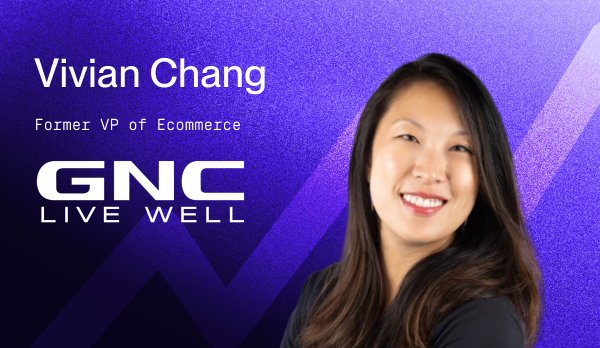
Vivian's bottom line: AI can only recommend what it can understand. At GNC, that meant treating product data as the foundation of AI discovery, with every ingredient tagged and every attribute clean. It also meant pairing that technical work with the long game of PR, community, and reviews, and starting small with a tool the team could shape, until skeptics became the ones pitching new ideas.
Vivian Chang & Kailin Noivo — Transcript
The Ecommerce Toolbox: AI in Retail • Human-Reviewed Transcript
[00:00:00] Vivian Chang: AI discovery and questions and answers for supplements and wellness is going to be a big area. The recent stat I've seen is somewhere, like, around 30% of the queries into, like, ChatGPT, Claude are around, like, health and wellness.
[00:00:21] Kailin Noivo: Welcome to another episode of Noibu's AI and commerce podcast. Joining us today, we have Vivian Chang. She's from Brooklyn. She used to work at GNC and has a bunch of experience. She'll give a better intro than I just did. So, welcome, Vivian.
[00:00:36] Vivian Chang: Hey. I'm happy to be here. Thanks for having me.
[00:00:38] Kailin Noivo: So, everyone always wants to know a bit about how you ended up in your current role and kind of your current career. So, maybe take us through that.
[00:00:44] Vivian Chang: Yeah. Sure. So, I like to say that at the heart of my career, I am a sort of marketer at heart, but I have now seen all of the different pieces of sort of consumer products, I would say. So, early in my career, did agency-side performance marketing, and then digital marketing, also launched an app for an ecommerce sort of affiliate player called RetailMeNot. And from there, went pure-play direct-to-consumer in meal kits with Plated, then CPG with Clorox, working on building direct-to-consumer and scaling digital brand experience for, like, Burt's Bees, Brita, and a few supplement brands. And then most recently was at GNC, so retail side. So, I was in retail, CPG, D2C, and affiliate. I love the consumer side. I love thinking about consumer needs, and I am now sort of doing independent consulting and also working on building a community that supports operators.
[00:01:52] Kailin Noivo: That's awesome. Very cool. Well, everyone has AI at the tip of their tongue, so maybe talk us through your experience so far with AI. Like, we chatted about it kind of falling into two categories; call it, like, AEO/agentic shopping. So, for example, like, is your SEO strategy changing? How much traffic are you seeing from LLMs, like, in LLM conversions? So, like, let's maybe, like, open that one up, and that's an interesting one. I'm personally more interested in operations. I get more questions about agentic operations, agentic optimization, things like that. So, let's maybe open up the first one. What have you seen so far on, like, the AEO side? I know that you ran some initiatives at GNC. What are you hearing from your friends, and based on your experience?
[00:02:38] Vivian Chang: Yeah. So, pretty early on, I felt like AI discovery and questions and answers for supplements and wellness is going to be, kind of, a big area. I think the recent stat I've seen is somewhere, like, around 30% of the queries into, like, ChatGPT, Claude are around, like, health and wellness, where, like, should I take this? And, you know, do I need creatine? All of those things. So, that's step one for us at GNC. It was to understand visibility of where we ranked and so forth. And so the SEO strategy, I think, got a shot in the arm because it was sort of there in the form of blogs, and we make sure that we have, you know, tagging on the site. But I honestly don't think it got as much attention as it needed. And so, it has become a much bigger priority, not only to continue creating the content, but doing things like FAQs on all of our product pages, building content hubs around these trending areas like creatine, like protein. And we also have partnered with two different outside vendors. One helps us build out the long-tail product pages, and we were seeing a lot of success there on being included in the Google AI Overviews as a result of that. So, think energy for, like, college students, you know, something like that. They'd have a little bit of a blurb and then a curated set of products on that product page. So, pretty quickly, we've seen good results on the AI Overviews. And then the second, as I say, we're still in, you know, we were in test-and-learn, was creating volume of content that is partially AI-written, human-reviewed, but AI-written to get that out there. I'd say that one, we haven't seen quite as much success on. We started this at the end of 2025, so we're sort of just, like, testing a bunch of different things. I think the other piece that has turned out to be very useful for us is understanding that, fundamentally, we needed to clean up product data for discovery, for AI optimization. And so we actually partnered with, now I would call her a forward-deployed engineer. At the time, it was sort of just, like, sort of a growth hacker who has some, like, technical skills. But, essentially, she built a tool that helped us clean up all of the attributes, make sure that all of the ingredients were separately tagged and discoverable and clean and searchable, and then also able to surface up trends really quickly and know which of our products work for those trends. So, I'd say our AI journey was, like, kind of trying a lot of different things and then doubling down on areas that we were seeing work.
[00:05:46] Kailin Noivo: That's interesting. Do you think because of GNC being in health, it made a lot more sense for it to play in? Like, how do you think that, like, translates over to, I don't know, like, fashion retailers? You know what I mean? Like, are they seeing the same amount of discovery, you think? Or, yeah, what are you hearing in the space? Like, it kinda makes sense for even CPGs, right, and for health, especially if I think, like, hey, I'm this age. Here are my fitness goals. I'm looking for a vegan protein or whatever. Like, obviously, you want that to shoot up, but I don't know if I'm doing that for my next pair of shoes.
[00:06:24] Vivian Chang: I think it's still early. Like, from what I've seen, like, the stats are highest around, like, health, beauty, personal care. You do start to get some of the things around, like, fashion, but my personal opinion is that, you know, consumers will always want some of the fun part of shopping still, right? Like, I don't wanna automate everything to a machine. And the fun part is oftentimes fashion, style, and so, yes, like, maybe provide recommendations or, like, hey, what are the materials that are used in these? But I think it's not quite the same. Now I will say, even in, like, health and wellness, what we're seeing is there are a lot of topical searches. So, I'll go back to creatine. Like, a lot of people are searching for, like, I'm a woman. Do I really need to take creatine? Will it cause bloating? And, you know, what can I take it with? Etc., etc. Honestly, I was seeing less of, like, tell me the three brands of creatine that I should go and buy. Right? Like, so I still think it sits farther in the research and consideration phase than the actual, like, make my purchase decision. Now, for some segment of the audience, I'm sure that will continue to change, and there are people who want to make the purchase decisions for them. But at least sort of what we were seeing, most of the search activity is all sort of in that, like, consideration phase of the funnel.
[00:07:56] Midroll: If you're listening to The Ecommerce Toolbox, you're entitled to a podcast-exclusive website audit. Go to noibu.com/podcast-audit for a free scan that uncovers the hidden friction blocking your conversions and shows you where you're leaking revenue.
[00:08:10] Kailin Noivo: No. That makes a lot of sense, and I think it's gonna be really category-specific. I always tell this story. We have this weird chandelier that came with the house with, like, all these, like, balls, and then, like, I broke one once somehow, like, dusting. And then, like, I'm like, I don't even know where to get a replacement for this.
[00:08:27] Vivian Chang: No.
[00:08:28] Kailin Noivo: Do you know what I mean? So, I just took, like, a million pictures with ChatGPT, and I'm like, "Can you find me this?" And it did a pretty good job actually at finding it, but I think that's, like, a very corner use case. Right? Or it's like, oh, we just put up these blinds or these curtains to block the light for my daughter when she sleeps, and, like, it kept falling. So, I'm like, what kind of tape should I use for this? Do you know what I mean?
[00:08:48] Vivian Chang: Yeah. Yeah.
[00:08:49] Kailin Noivo: Unless, say, they're like, hey, my anniversary is coming up. Like, what outfit should I buy? So, I'm very curious how that kinda plays out. But yeah. No. It's really interesting, especially the category that you were mentioning you guys were in. I think it makes a lot of sense. And, candidly, the traffic is growing, and conversions are high when we look at our customer base, but it's still a very small part of overall traffic and conversion, candidly. I don't know if you saw that as well. I don't know if it's different in health, but yeah.
[00:09:16] Vivian Chang: No. Even for us. Yeah. I think to some extent, really, GNC has some work to do. Right? Like, because it goes back to, yes, you can answer the question, but also a lot of it is around: is your brand in the conversation? What is the general, like, positive, negative sentiment around the brand? Right? And so you can't solve it only through technical solutions and content. You also need community, reviews, PR, and so those, I think, are longer-term initiatives that we're not quite seeing the impact of yet. But I think the other flip side of it is everyone sort of thought about AI and maybe AEO as, like, its own distinct island. And as we get into it, it's really all the normal things. PR, community, SEO, just done more integrated and better and, like, prioritized.
[00:10:11] Kailin Noivo: No. It makes sense. So, there's definitely a lot of synergies between traditional SEO and that. So, flipping into more on the operations side, I get a lot of questions from execs in retail. So, everyone gets agentic shopping, AEO, maybe, like, chatbot. Okay. That's kinda like level one. And then, like, level two, everyone wants to start understanding, like, well, how do I actually implement AI from an operation standpoint? So, for example, I don't know, aggregating customer feedback, watching session replays so that you don't have to - no one has the time to do it. Everyone knows it's important, right, or automatically auditing campaigns. So, maybe on the operations side, like, where have you seen the most appetite amongst your peers? And then where do you think people are kinda getting stuck, if so?
[00:10:59] Vivian Chang: Yeah. I'll sort of go back to the example that I started sharing earlier. We built this tool that sort of automates the product data enrichment. Now, prior to having the tool, it was a person in the, you know, physical, you know, products, like science and research team that was taking the ingredients panel. Right? Like, making sure that every one of them has its own row and distinct label. So, that is one part that was, like, easy to automate the work on. The other is then within the ecommerce team, item setup. Right? Like, and I'd say this is one of those areas. Initially, the team was actually pretty hesitant and sort of skeptical, I would say. Like, they thought their process was fine, fairly quick. And as a leader, I actually had to sort of mandate the adoption of this tool initially to say, like, yes, I understand you think your workflow is working well, but there are so many extensions of how we will be able to compound exponentially if we use this tool. And so, it really was like, hey, you've gotta do 20 new products in this tool a week, kind of thing, and give the feedback back on, like, what's working, what's breaking, what's not working. And then at a certain point, we hit that, like, then they got it. Right? Then they got excited about the tool. Then they were coming up with new product ideas that you can, and I think that's the magic, is, like, when the team understands that this is not just another SaaS tool that I'm given that I don't have any say over. With AI, actually, we can custom build things that work for my workflow in a pretty seamless way. And so, that's where we really saw, I think, some of that operation side that unlocks for people. And then the fun part was then saying, like, what are the extensions that we didn't expect? So, this was more or less like an ecommerce tool, right? That's for digital discovery, and you know, that's where you need product data. What we also realized is it was an invaluable tool for the sort of merchants that have to update all of the records around the products. It used to be 20 hours. Right? You have to go through the thousand products that we have at GNC and update the registries, make sure that we're certified. Now it's, hey, what format do you want? We can upload it in, you know, an hour or so. And those were those moments where you could see the light bulb moment in people's heads. So, I think that's important for operations, as not trying to do anything too big, but, like, start small, get some wins, get people really, like, hands-on in there. I'm also a fan of, like, partnering with either a contractor or a vendor or something until, like, you have some of those early use cases and then start to get that AI fluency.
[00:14:05] Kailin Noivo: What do you think the biggest barrier is inside an organization to adopt truly agentic workflows? And, like, I think a good distinction is kinda what you just called out. Right? So, it's like you take your human-centric process of adding or editing SKUs, and then you open up a ChatGPT or whatever, Claude window, and then you, like, ask it for edits. You almost treat it like an accelerated, like, word editor. You know what I mean? Or phrase editor. That's kinda, like, very surface level, and then you have truly agentic native flows. And just to use a Noibu example, like, the kind of old way of, I don't know, prioritizing a bug, which is one of the many use cases of ours, is you would go in. You would find the bug. You would look at the code. You would watch the session replays. You would generate a Jira ticket. The ticket would go to a developer. They would then replicate a lot of what you just did, go in, maybe try and manually replicate the bug, then go into the codebase. It's like this very long, drawn-out process, and, like, you can implement AI in there. Right? So, for example, you can take screenshots of the stack trace or the bug code and ask Claude to interpret it. Or you could just implement an AI-native flow, which is every week, AI will scan, find, investigate, draft a fix, and send the fix to a developer to approve. And, like, that is just like a completely different flow. How were you able to, like, what was the biggest barrier to almost flipping some of these processes to AI-native instead of, like, call it, like, surface-level AI-enhanced, which I think a lot of companies are stuck in right now?
[00:15:40] Vivian Chang: Yeah. Yeah. I like that distinction, actually. I might steal that. But AI-enhanced, like, is where most companies are. First of all, yeah, I'll be candid. I think, like, GNC is still early on the AI journey, and I think it's helpful to share that. I think what doesn't help is when everyone thinks that they're so behind and then you get, like, paralysis of not moving. So, I think the challenge is you have to be really clear what outcome you're looking for, and then you also have to be willing to give enough context for the AI to think and to understand what is good, what is bad. And I think that's what I find is hard in organizations, to really get into that, like, AI-native workflow, because there hasn't historically been very clear documentation and requirements, and the outputs change frequently. And that becomes hard to build, like, an AI-native workflow for. Again, that's where I come back to: it's better just to pick somewhere to start and have something to respond to than to maybe create the perfect output that is usable on day one, and just know that this is a starting point to iterate from.
[00:17:01] Kailin Noivo: Do you think you need to revamp your tools? Because, I mean, obviously, every SaaS provider right now is, like, trying to be like, yeah, actually, we have AI, and they're really just wrapping some sort of AI chatbot in their data. Right? Yeah. And that's not exactly, like, it's kinda like the distinction we just called out. Right? Like, are you AI-enhanced? Are you AI-native? Like, when you look at, like, vendors and things, like, are you thinking, like, wow, I gotta swap everything out? And maybe some vendors are doing it better than others, but how are you thinking about that?
[00:17:30] Vivian Chang: There's a gradient on it. Are we likely to swap out our, you know, basic, like, consumer journey and real-time personalization tools? Probably not, because those vendors are very rapidly building on their side as well. So, I think that's one piece of it. There are others where I think yes. Like, not immediately, but in the near future, I think there are better outcomes, better efficiency by completely swapping out. And, actually, you know, what you were just saying of looking at session replays, you know, we started piloting something where you sort of let, I'm just gonna call it, like, let the AI loose, and it sort of does a combination of looking at heat maps and session replays and what is traditionally maybe like event funnels. And it's just saying, like, here's the opportunity. Right? So, instead of having three distinct tools, going to each of those things and then having to synthesize, it's actually easier just to have that one that looks at it all and comes back with the insights.
[00:18:37] Kailin Noivo: One of the things we've been spending a lot of time thinking about, and that's where I think vertical tools will matter a lot. And I think we learned this with, like, Shopify and, like, Demandware, which became Salesforce Commerce Cloud. Like, if you become a domain expert, everything is a lot more purpose-built, which means that when you're building agents, it's a lot easier to actually instrument them. And a lot of the, like, you won't have to teach your session replay tool that, like, add to cart is good. I know that sounds kinda crazy, but, like, it does change a lot of things because when you don't have these things automatically instrumented and all of that, it could get pretty dicey. As we're rolling up on time here, Vivian, I'm curious. Like, what do you think the biggest kind of trend for next year is gonna be, like, going into 2027? Like, what do you think most of the money is gonna be spent on, and most of the executive attention's gonna be centered towards?
[00:19:30] Vivian Chang: I still think there's a ton of room on exploring for the market. I'm gonna call it, like, marketing communications to consumers. Like, I think there's a lot of teams that are using AI somewhat, right, like in paid media on optimization or on creative, but we're not hooking up all of the tools yet. Right? Like, this tool that understands what a user is actually doing on your site, and then how are they engaging on email content, and then their paid media. Like, that whole piece, I think we're just on the cusp of. Like, a lot of the AI pieces have been more on the pure ecommerce optimization, I would say. And so, I think that's the next wave. And, honestly, I think it's as much human retraining as it is about the tools being developed because, I think, that's gonna completely, like, change the workflows of how things would be. You know, traditionally, it's like you hire one email person. What they do is they're really good at sending emails every week. Right? And instead, it's been like, that's no longer your job. Instead, like, how can we be creative on creating content that is personalized, and what is the new, really advanced segmentation, for example? So, I'm excited to see that. I think we're getting close to the reality of, like, one-to-one personalization that we've always wanted, but we're just at the very starting point of it.
[00:20:58] Kailin Noivo: Well, it's like ABM at scale for the individual consumers. It makes sense. I think tool fragmentation will become a big block because unless you're a really big company with, like, clean data and, like, a proper data lake, then you have to hire people to manage it. Like, honestly, vertical tools are just gonna solve most of these problems for people. Because, like, anyways, it's gonna be interesting to see. I agree with what you're saying.
[00:21:25] Vivian Chang: I don't know if I think it's gonna be in the next year, but I am ready for the time when it's not like there's a new AI tool that I feel like I have to go learn and understand, like, every single week. Like, at some point, we're gonna get some of that consolidation, and I'm ready for it.
[00:21:41] Kailin Noivo: For sure. Awesome. This was great. Thanks so much for your time, Vivian.
[00:21:45] Vivian Chang: Absolutely. Thank you.
[00:21:46] Outro: The Ecommerce Toolbox: AI and Retail is brought to you by Noibu. To find out more about Noibu and how we unify error monitoring, site performance, and experience analytics to uncover growth opportunities and skyrocket your revenue, visit www.noibu.com. That's n-o-i-b-u.com. And then make sure to search for The Ecommerce Toolbox: AI and Retail on Apple Podcasts, Spotify, or anywhere else podcasts are found, and click subscribe so you don't miss out on any future episodes. On behalf of the team here at Noibu, thanks for listening.
FAQ
Other episodes


.png)
.png)
.png)
.png)
.png)

.png)
.png)
.avif)
.avif)
.avif)
.avif)
.avif)
.avif)

.avif)
.avif)
.avif)
.avif)
.avif)
.avif)

.avif)
.avif)
.avif)
.png)
.avif)
.avif)
.avif)
.avif)
.avif)
.avif)
.avif)
.avif)
.avif)
.avif)
.avif)
.avif)
.avif)
.avif)
.avif)
.avif)
.avif)
.avif)
.avif)
.avif)
.avif)
.avif)
.avif)
.avif)
.avif)
.avif)
.avif)
.avif)
.avif)
.avif)
.avif)
.avif)
.avif)
.avif)
.avif)
.avif)
.avif)
.avif)
.avif)
.avif)

.avif)
.avif)
.avif)
.avif)
.avif)
.avif)
.avif)
.avif)
.avif)
.avif)
.avif)
.avif)
.avif)
.avif)
.avif)
.avif)
.avif)
.avif)
.avif)
.avif)
Audit your site today
Understand the revenue impact of all errors on your site and how to swiftly reproduce and resolve.