
Expert Perspectives
Expert Perspectives
Episode 139
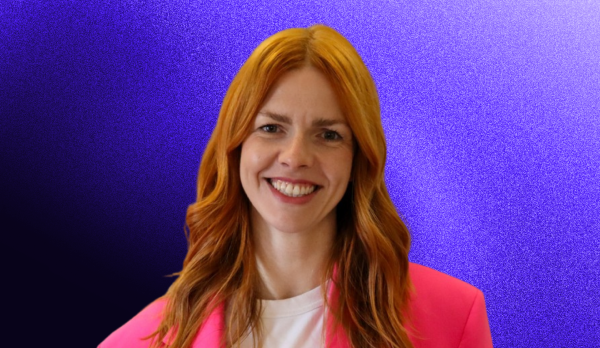

In this episode we talked about:
- The reason Folio Society focuses on creating a market rather than beating competitors.
- Why a premium publisher chooses to opt out of AI generated illustrations and page layouts.
- How to measure the impact of brand awareness campaigns in specific regional markets.
- The way traditional attribution models are failing to capture traffic from AI agents.
- Methods for bringing commercial rigor to a team focused on editorial excellence.
- The strategy for evolving a legacy brand without alienating long term collectors.
🎧 Listen now on Apple Podcasts, Spotify, or YouTube

Episode highlights:
02:15: The history and mission of The Folio Society
05:40: Creating a market for products without competitors
07:15: Balancing performance marketing with long term brand building
09:00: Changing brand perception in the UK vs the US
13:45: Ethical considerations for AI in creative production
18:30: Automating data analysis and demand planning
Lauren's Bottom Line: For a heritage brand, the hardest marketing job isn't beating competitors — it's creating the market by explaining what you do to the fans who don't yet know you exist. Growth comes from evolution, not revolution: fix the commercials first, prove performance works, then earn the right to invest in the slow, unattributable work of brand.
Lauren Juster & Kailin Noivo — Transcript
The Ecommerce Toolbox: Expert Perspectives • Human-Reviewed Transcript
[00:00:00] Lauren Juster: With D2C, there's always a real challenge in making sure that marketing has to be the sales engine. You can't have a kind of lovely brand campaign where you've done a load of out-of-home or TV ads, and you're like, yeah, like, 5 million people saw it. And so, therefore, thumbs up. In D2C, it has to be. And therefore, there were this many add-to-baskets, and this many people actually checked out.
[00:00:23] Kailin Noivo: Super excited for today's episode with Lauren. We covered a broad range of topics from everything marketing to, obviously, a little bit of AI. Super excited for today's podcast.
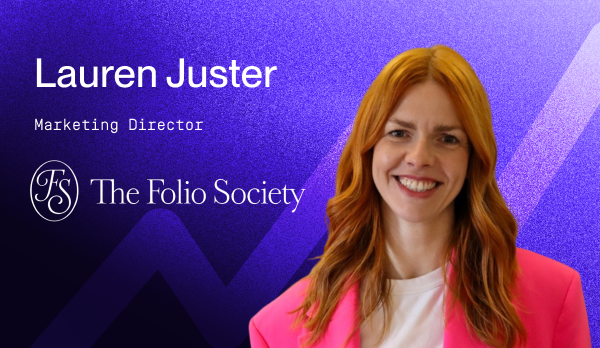
[00:00:32] Kailin Noivo: Welcome to another episode of The Ecommerce Toolbox Expert Perspective. Joining us today, we have Lauren. She's joining us all the way from the UK, and she's the marketing director at Folio Society. Welcome, Lauren.
[00:00:45] Lauren Juster: Hi. Thanks for having me.
[00:00:47] Kailin Noivo: Awesome. I always like to start off by learning a bit about your career journey. So, why don't you take us down your career journey path and how you ended up in your current role?
[00:00:55] Lauren Juster: Sure. So, I'm a bit of an accidental marketer. So, after university, I was a bit unsure about what I wanted to do, and I stumbled into a job as an ecommerce assistant for a small gifting brand in the UK called Biscuiteers. It was tiny. I think I was, like, employee number four into the office, and a big part of my job was, like, processing orders. But I stayed with the business for twelve years, so I kind of went through the transformation of being a kind of, like, nimble, feisty startup through to their kind of growing pains that you get when you get a little bit bigger, and the kind of feisty startup mentality needs to be underpinned by processes and systems that all talk to each other. And then when I left, it was a kind of multimillion-pound, multichannel retailer. We were online. We did marketplaces. We had retail stores. We did wholesale and B2B as well. So, yeah, it was a big learning curve for me. I absolutely love the brand. I still think it's fantastic. And I joined the Folio Society back in 2024. The kind of, I guess, the objective I was given was to make the marketing work in, kind of, I guess, 2024 and beyond world. Our business was doing really well. It had that amazing COVID bump. But I think the kind of halo that it'd seen in sales had taken a bit of a dip, and it was starting to slide backwards. And marketing was identified as an area that definitely needed a little bit more support than it was potentially getting. So, I've been here three years. My background is I'm a marketer, but my background is actually really ecommerce. And I love ecommerce because it is the kind of intersection of sales, and marketing, and operations, and it's where the fun is. I think working in D2C is just the best because you get to see everything you're doing. You'll get a read on it, whether it's good or whether it's bad. And so you're always learning. It's fantastic.
[00:02:49] Kailin Noivo: I love it. Like you mentioned, a lot of businesses kind of started to peak during COVID. And then on the back of that, they needed to kind of rebuild a lot of their demand function. Folio Society has been around for a long time, right?
[00:03:01] Lauren Juster: Yes. Yeah. Nearly, it'll be 80 years next year. So, it was founded in 1947, which is crazy. And it was a book club initially, so what Folio Society is known for doing is taking the world's best loved stories and turning them into kind of amazing immersive reads. So, we take the story, and we turn it into a book that's kind of worth reading and re-reading, from the kind of beautiful illustrations that we commissioned to go in them through to the materials that we use. Every book that we publish is something that we feel truly passionate about. Somebody in the business has to really vouch for it, for us to publish it, and we're really proud of what we do. And there's a really amazing market out there. Our customers are incredible. They're, you know, we wouldn't have survived for 80 years if we didn't have a real sense of fandom around what we do. And there's some, you know, really niche things that we publish, but there's always a fan somewhere. And so my job is to find those fans and make sure that they see what we do. It's amazing. Yeah.
[00:04:04] Kailin Noivo: Very cool. And, obviously, you joined the business on the back of COVID. So, maybe talk to me a bit about, like, how did that business change, like, from a marketing standpoint, pre to post COVID? Like, where did it shake out?
[00:04:18] Lauren Juster: Yeah. So, I think the thing that was quite clear, I think, around Folio during the COVID period is that the business had undergone quite a big transformation in the prior years. So, I think Folio has been around for 80 years, but it had kind of lost its way a little bit in the, like, early to mid 2000s. I think it was a bit unsure of, like, what model it should be. So, originally, it was a subscription-based business, and it had kind of a membership that was, I guess, like, falling. And our CEO, Joanna Reynolds, did an amazing job of effectively trying to navigate, well, how does Folio fit in in this world? So, gone was the membership model. And I think there was still a slight feeling within the business, potentially, that actually, you know, what it used to do was the right thing and that this new world order perhaps wasn't quite right. But I think COVID had shown that there was clearly an interest in what Folio produces. And so, I think what they needed was a sense of confidence to be brought into the marketing, and the big change that I kind of looked at was the way that we need to to look at the operating problem of Folio from a marketing perspective is actually, it's finding and creating a market for for the books that we sell because not a lot, well, there are no competitors that do what Folio does. So, the big challenge for me is not necessarily going, what are our competitors doing? How can we be ahead of them? How can we keep them at bay? It's going, we literally have to explain what we do because it's not really obvious to everyone. But we know that there are people out there that will love what we do. So, that's the big challenge. And I think refocusing the marketing in that lens, I think, was probably what was needed post-COVID, because what they were doing pre-COVID wasn't working; the business was sliding backwards, so it had to shift in order to move forward.
[00:06:13] Kailin Noivo: Very interesting. And then, kind of that starts to beg one of the age-old questions, is how do you kind of balance brand versus direct attribution and all of that stuff? So, how are you thinking a bit about, like, brand and building that kind of long-term engine as well? Because, like you mentioned, it sounds like there's a heavy education component to what you're doing.
[00:06:32] Lauren Juster: Yeah. Definitely. I think building brand is something that is not easy. Like, I think it's, personally, my background is ecommerce, I'm a performance marketer at heart. So, when I first came into Folio, the most obvious kind of route in was for me to go, “Okay, well, give me a little bit of money. We'll test it out here. We'll see what works, and then we'll build on that.” And brand is something that is instinctual, and it's something that takes a long time. And the big challenge for Folio is that some people, particularly in the UK, kind of knew what we did, and there was this kind of view that the brand was perhaps, oh, yeah, my granddad's, or my grandma had a Folio book. It would inevitably be leather, something quite obscure or a classic. And in the UK, we really wanted to change people's minds about who Folio was because we publish across the board from modern fiction, science fiction, fantasy, to the classics. We, you know, haven't forgotten about those. So, there was kind of two jobs at hand for me. One was building the brand in the US, which is our big target market. And in some ways, that's easier because you are starting almost from scratch. And the second one was changing the viewpoint of how people in the UK, or the people that are aware of us, see that. And I think it's a long game. That's what I've come to realize. It's not something that, like, you know, with paid media, you can do overnight. But for me, it's something that's, like, a real focus. But I've just had six months out on maternity leave, and I've come back. And I think for me, brand is absolutely where our focus needs to be now. The business has undergone a huge amount of growth in the last three years, which is fantastic. So, what we're looking at is what does that mean in terms of laying the foundations for how people see us in, say, 2, 3, 4, 5 years' time and beyond that? So, it's all channels that, annoyingly, you talked about direct attribution, you can't really attribute things like PR influences, how content is created and absorbed, how LLMs and, you know, AI is absorbing some of this information. It very much feels more like black magic than a science, I would say. But it is something that I think you can't sleep on. And especially when you have a heritage brand like this, it's really important that you don't throw the baby out with the bathwater. Like, we're not looking to start again. Everything at Folio is an evolution, not a revolution, because we don't want to alienate those customers that have been on a journey with us for a very long time. But at the same time, we know that there's a huge world out there that could really, really tap into what we're doing and those people you want to find.
[00:09:04] Midroll: If you're listening to The Ecommerce Toolbox, you're entitled to a podcast exclusive website audit. Go to noibu.com/podcast-audit for a free scan that uncovers the hidden friction blocking your conversions and shows you where you're leaking revenue.
[00:09:18] Kailin Noivo: Yeah. It's such an interesting, there's so many kinds of threads to pull on there, but, yeah, you had mentioned one of them. So, obviously, AI, I think I was reading. AI is not that popular right now in terms of, like, it's very popular in terms of usage, but in terms of, like, public opinion on AI, right? Is it gonna take all the jobs? Is it gonna do this? Obviously, you folks are in a category that's been kind of heavily debated, where it's like, “Hey, can you train AI models on books? Can you not? If you bought the book once, can you train a model on it?” So, I think there's still a lot of questions there. Maybe divide it into, like, two categories. One, like, when it comes to, like, how you guys think about AI and then, like, the content writers and how they should use it or not use it. And then the second front, for actual marketing and creation of, like, assets and ad campaigns and more kind of operational things, have you guys started looking at any of that at all?
[00:10:14] Lauren Juster: Yeah. We have. We've had some pretty lengthy debates about this because I think the thing that can be frustrating if I start with question two first, the thing that can be frustrating is it feels like a lot of the platforms out there that we choose to work with, that are working well for us, like Meta, like Google, where, you know, there's a scalability, there's, you know, an opportunity to scale, you know, it's a worldwide audience, we can find deep fandoms within it with clever targeting. There seems to be a real race to adopt AI across almost everything. And I think some of the things that make me feel nervous is that I think, at the moment, there does feel like you've got this opportunity that you can opt out if you want to. So, around content creation for assets, which, yeah, you know, Meta, we find that our creators fatigue after 5 to 10 days if they have strong enough spend behind them. The pressure it puts on my creative team to then, like, keep responding to new creatives over and over again, it's really high. And so there is an argument to say, “Well, should we be adopting AI to fill in some of the gaps that, you know, my creatives maybe are struggling to keep up with?” And we have been back and forth on this a lot, and I think where we've landed is that, actually, anything creative really goes against the kind of ethical practices that we have in the production of our books. We would never use AI to lay out a page, for example, in our books. We would never use AI illustrations. Like, we always commission illustrators to work with. And so, I think if we were to start using AI to generate creative assets, I think it makes it a really tough position for us then to stand up and say that we really support all the artists and illustrators that we work with, it kind of just goes against that ethics, I suppose. However, that being said, I feel at the moment, I can opt out of AI on the platform, in that I can go, “Fine, I'm just gonna have to either deal with the fact that I can't keep up with the level of creativity I need, or I'm gonna have to put more pressure or find more budget to deliver them.” I think that, you know, I was at a conference recently, and the announcement was that Meta was saying that, you know, the expectation is that it's going to be one-to-one personalization on ads. So, you won't have a choice. They will take your creative and they will adapt it with AI so that it's more fitting for the end user, because they may have viewed something or have an interest in this area. And that, I think, is a slightly more tricky and frustrating position to be in as a marketer, because then you don't have the option to opt out around the creative side of things. I don't wanna sound all doom and gloom because, actually, I think, on a personal level, I think AI can be really fantastic. And for your point around, like, AI and how we use it, I think there's total value in automating a lot of things like reporting and some of the donkey work that, you know, a Monday trade meeting where you have to pull together all these stats. Actually, AI can be quite transformative there. And that's more where it's helping us, I think, is things like trying to work out, demand planning and trying to work out the best route forward on, you know, data analysis and that kind of stuff. So, it's a tricky one. I think we're still working out from our perspective, like, how does AI fit in? And we don't wanna get left behind, and you can see the value in some of what it does. But I think when it comes to how we present the brand, especially being a heritage brand, especially in the product, that what we do, it's luxury, it's premium. Customers deserve premium creative that reflects the beauty of the books. And I think AI can do a good enough job, but I don't think it can do the best job. I still think there's a touch of humanity that's absolutely needed throughout that. And so for that reason, we're kind of, I guess, trying to stay clear of the creative side of things.
[00:13:55] Kailin Noivo: Yeah. Everything you're saying is resonating. Like, I think what I'm seeing in the market is that it's still kind of clear when people try and outsource their creative work to AI, whether it's blog posts, asset creation, or story creation, it all kind of just looks congruent. I mean, it kind of looks the same; it's like different topics, but it kind of just looks the same, and it's very clearly AI-generated. Now, on the other side, where we've seen a lot of value in AI is repeat, it’s automating repetitive tasks. Example, Monday morning trading, reviewing customer complaints, things like that, grouping together themes from why people are abandoning their cart. Like, things like that seem to be very useful because it's kind of like, yeah, it's like repetitive tasks that have been done before. And, like, 90% of the time, there's a right answer, if that makes sense. Whereas in creative, not exactly like that by any means at all. So, no, I think that's really consistent with what we've been hearing. As we look to move on, I'm curious. How are you balancing D2C initiatives with, like, brand initiatives? Anyone who's kind of going through maybe a similar evolution on the brand side, how have you been able to balance metrics in the interim? Sometimes those things feel like they're maybe growing in different directions.
[00:15:12] Lauren Juster: Yeah. It's an interesting one. I mean, I think when I came into the business, there was quite a clear commercial need to ensure, like, that the sales were there first and foremost. And from my perspective, when I came in, I kind of had a kind of a rough idea of, like, a bit of a 3-year plan in my head of what I would do. And and year one, absolutely, had to be, like, fixing the commercials, making sure that we've got the right tech stack in place in order to be able to do CRM correctly, making sure that we've got robust commercial reporting to make sure that we can understand how our channels are performing, how our customer base is shifting, you know, where the effort and reward needs to be balanced for all of those things. And that's really paid off now. And I think in terms of, you know, with D2C, there's always a real challenge in making sure that marketing has to be the sales engine. You can't have a kind of lovely brand campaign where you've done a load of out-of-home or TV ads, and you're like, yeah, like, 5 million people saw it. And so, therefore, thumbs up. In D2C it has to be, and therefore, there were this many add-to-baskets, this many people actually checked out. Here's what they bought. Here's what they're likely when they're likely to purchase next. And so everything I do has to be kind of commercially rigorous, and that's, like, something that I personally really believe in as well. I would never want to go and work in a marketing role that didn't have that commercial rigor attached to it. It just wouldn't interest me. No fun. I think it's only now, where the commercials are working well, and the business is in strong growth mode, where I feel confident enough to be able to say, it is a bit of a punt on some more brand stuff. So, we've started small initially. Like, we wanted to work in channels that we felt could show some element of return. So, we isolated YouTube as an opportunity channel, and we've been doing some upper funnel brand awareness stuff there. So, for us, we were isolating it in specific states. It's just U.S only, and that really helped give us the confidence. Initially, all we got was kind of a brand lift test, which gives the initial kind of confidence of, like, oh, this many extra people saw it, and they recognize the brand. So, you know, there's an immediate metric there which can kind of keep everyone calm. But then the way that we're checking afterwards is, you know, our initial test was in New York and, well, New York City specifically. We then looked at, well, what impact did that have in terms of customers shopping, new customers into their business from that area, what they spent, AOV, repeat rate, all that kind of stuff in the kind of 30, 60, 180 days after that campaign, and we're still measuring it now. And we're tracking that against what the general benchmark of the business is. And I think that's really helped give us some confidence that that kind of fluffy brand stuff that, you know, you can't say this definitely drove X amount of money, does end up paying off later down the line, but you have to have patience. But that's not something that I feel I could have done at the beginning. Like, for my end and actually, the business, like, incredibly open, my CEO, Joanna, has a marketing background, which is amazing because she sees the value in it. But I think I needed to feel like I could come in and say with some confidence that things were working okay, so we can kind of move. You’re at the bottom of the funnel, so you want to start moving up. So, that has been a way that has really helped us to balance that upper funnel activity with actual, real-life results beyond impressions.
[00:18:48] Kailin Noivo: Very cool. No. It makes a lot of sense what you're saying. And it's always a push and a pull, and it's really, really interesting at times to balance. As we look to wrap up, curious kind of as a parting question. We chatted a little bit about AI already. Are you folks seeing any traffic from AI discoverability search engines at all? Has that been a conversation and a focus? I think you guys are in potentially an interesting category, also being a legacy brand. Like, have you guys seen that at all?
[00:19:18] Lauren Juster: Yeah. It's so interesting because, actually, it's timely because I'm doing a little bit of a project around this at the moment in the business. So, at the moment, search volumes are still really small. Probably, like, within our organic search traffic, it's probably about 10%, less than 10%. It sort of depends on month to month. But as with all of the AI stuff, like, this stuff moves at the speed of light. So, like, what you see one month, like, is not what you see the next month. However, I do think that the kind of traditional attribution of how you look at, like, the traffic account comes to the website is probably very broken because I think that people are using, say, your ChatGPT, Claude, Gemini, whatever, as a chatting agent, like an agentic chatbot. But then I don't think they're necessarily clicking through. And, obviously, the route to click through the direct links is very different depending on which AI assistant you're using. So, what I think we're seeing is an uplift in things like direct traffic or an uplift in organic. So, I think a lot of it isn't readable in a traditional attribution sense, in the way that most marketers would look at it. So, it's something that we're looking into at the moment. I think for me, the bigger issue is how we're perceived by those agents, because I think there's so much more focus, I think, on third party. So, like, customer reviews, PR, testimonials, Wikipedia, Reddit, that kind of stuff to try and assess what your brand is. It's an area where, luckily, our customers are very active. But I think when they're looking at things like PR, you know, we've worked really hard to try and move away from Folio what it was, say, 20 years ago, this kind of, like, old collector's club into this kind of modern brand. And you can still see hints of, like, that old Folio in ChatGPT, Claude are coming back with when you ask them who are Folio? What do they do? And so a big focus for me, and it speaks to the brand thing, is, like, how do we change this? And it's not gonna be a technical fix on our website. It's absolutely going to be, like, big brand PR pieces. It's going to be changing customer perceptions about what we do. So, it's the long game once again, and it's not easily fixed, but it's something that is a major focus for me at the moment.
[00:21:36] Kailin Noivo: We've been trying to do the same thing on our side. It's really tough to change the perception. These things just take time and repetition, and you have to be very explicit. So, Lauren, this was a phenomenal episode, so I really appreciate you taking the time. Thanks so much for hopping on.
[00:21:50] Lauren Juster: Thank you so much. Thanks. See you later.
[00:21:53] Midroll: The Ecommerce Toolbox: AI and Retail is brought to you by Noibu. To find out more about Noibu and how we unify error monitoring, site performance, and experience analytics to uncover growth opportunities and skyrocket your revenue, visit www.noibu.com. That's n-o-i-b-u.com. And then make sure to search for The Ecommerce Toolbox: AI and Retail on Apple Podcasts, Spotify, or anywhere else podcasts are found, and click subscribe so you don't miss out on any future episodes. On behalf of the team here at Noibu, thanks for listening.
FAQ
Other episodes



.png)
.png)
.png)
.png)
.png)

.png)
.png)
.avif)
.avif)
.avif)
.avif)
.avif)
.avif)

.avif)
.avif)
.avif)
.avif)
.avif)
.avif)

.avif)
.avif)
.avif)
.png)
.avif)
.avif)
.avif)
.avif)
.avif)
.avif)
.avif)
.avif)
.avif)
.avif)
.avif)
.avif)
.avif)
.avif)
.avif)
.avif)
.avif)
.avif)
.avif)
.avif)
.avif)
.avif)
.avif)
.avif)
.avif)
.avif)
.avif)
.avif)
.avif)
.avif)
.avif)
.avif)
.avif)
.avif)
.avif)
.avif)
.avif)
.avif)
.avif)
.avif)

.avif)
.avif)
.avif)
.avif)
.avif)
.avif)
.avif)
.avif)
.avif)
.avif)
.avif)
.avif)
.avif)
.avif)
.avif)
.avif)
.avif)
.avif)
.avif)
Audit your site today
Understand the revenue impact of all errors on your site and how to swiftly reproduce and resolve.