
Expert Perspectives
Expert Perspectives
Episode 146

In this episode we talked about:
- Why AI demos can succeed while the same systems fail in production
- What evaluation, governance, observability, and security practices enterprise AI needs to scale
- Why narrowly scoped domain agents often perform better than agents designed to do everything
- How existing processes and “golden datasets” make strong foundations for enterprise AI use cases
- Why lower-risk, repeatable tasks are often the best place to begin AI adoption
- How to evaluate whether AI automation actually delivers enough ROI to justify its cost
- Why retailers increasingly need to think about discoverability inside AI agents, not just traditional search
🎧 Listen now on Apple Podcasts, Spotify, or YouTube

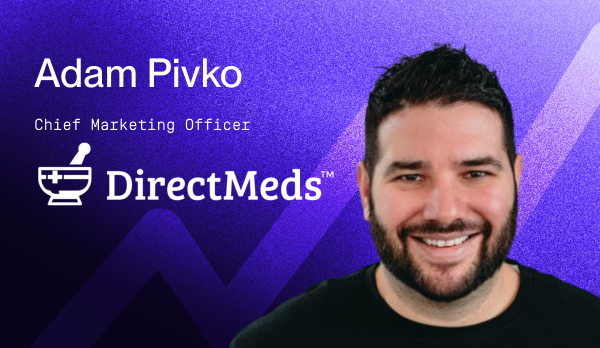
Adam's bottom line: Being AI-first doesn't have to mean fewer people. At Direct Meds, it means building a proprietary stack of agents that makes a 440-person team faster, connecting every ad dollar through to LTV, and working within HIPAA's limits on patient data. The shift didn't take off until the company hired an AI maestro whose job is to train AI to understand each leader's role, not to learn that role himself.
Adam Pivko & Kailin Noivo — Transcript
The Ecommerce Toolbox: AI in Retail • Human-Reviewed Transcript
[00:00:00] Adam Pivko: We have an AI maestro. His expertise is rolling out AI. If I go to him with an end result that I am seeking for AI, he will work through the steps to make sure it gets there. His job is not to completely understand my role. His job is to train AI to understand my role.
[00:00:17] Kailin Noivo: Welcome to another episode of AI and Retail with Noibu. Joining us today, we have Adam Pivko. Welcome, Adam.
[00:00:25] Adam Pivko: Hey. Thanks for having me.
[00:00:27] Kailin Noivo: Awesome. Adam's the CMO of Direct Meds. Before that, he had a pretty interesting life. So, I'll let him kick us off with the first question, which is: talk to us a bit about your career journey and how you ended up in your current role.
[00:00:37] Adam Pivko: My first job, my first, like, other than bartending through university and stuff like that, my first real job after university, I was door-to-door sales selling photocopiers for a pretty popular company that'll go unnamed at this point. And I realized through that experience, I'm like, hey, who prints anymore? Like, nobody prints. I wanna sell stuff on the Internet. And sure enough, that literally began my journey and worked my way through affiliate networks, payment companies, anti-fraud, really prominent CRMs, and business automation tools to massive ecommerce conglomerates, launching my own brand and now getting acquired into Direct Meds, kind of the really short story.
[00:01:16] Kailin Noivo: I love that. I mean, congrats. Getting acquired is never, never an easy thing, and the entrepreneurial journey is a challenging one.
[00:01:23] Adam Pivko: Super lucky. Yeah.
[00:01:25] Kailin Noivo: No. For sure. I mean, luck meets hard work, right? It's never…
[00:01:31] Adam Pivko: I'm with you on my luck.
[00:01:33] Kailin Noivo: So, no, it's good. But, honestly, you and I were chatting before the show. What we're really seeing as pull from our viewers and our customers is people wanna know how to be an AI-first business. Retail's been in a bit of a slump for a couple of years. Inflation, consumer demand for, like, nonessential products is kind of flat. Everyone's being asked to drop their OpEx from the CIO. Maybe a bit of a COVID hangover, so you bought too many tools, and I need to consolidate. These are kind of the common talk tracks over the last couple of years, and now, really, we're seeing an acceleration of people wanting to build AI agents in their business. So, maybe start off by telling us a bit about what is an AI-first company in this category in your opinion, and then, from your vantage point, like, what are kind of some of the basic building blocks you need to be AI-first?
[00:02:27] Adam Pivko: Yeah. It's funny. It's really funny. I'm uniquely in this space of, like, rapidly evolving telehealth, and there have been some really crazy articles out there about competitors of ours being potentially even the first to a billion-dollar company just using AI and having no employees. Now, granted, I don't think that's the way we operate. I think we're much more hands-on with our patients and our providers and, generally, our communication internally. Plus, we're just, like, rapidly growing as an organization. I think we're up to 440 people now; that's the last number I saw. So, for us, it's not necessarily just about reducing OpEx or anything of the sort. It's actually, we look at it as a layer of efficiency to make anybody who's working with us that much more efficient. Also, just because of the weird, multifaceted aspect of this industry, in particular with regards to, like, compliance, which is keeping people's health information secure, we find that not using AI for many conversations is actually the better and safer way to do it for our patients and for ourselves. Ultimately, we wanna maintain our compliance and continuously improve how we're treating people's sensitive health information. So, for us, we use AI internally to make ourselves more efficient, first and foremost. And then second, behind that is how do we improve our patients' lives with the use of AI. So, those two things are really what we're focused on when it comes to incorporating more and expanding on AI in our business.
[00:03:57] Kailin Noivo: Makes sense. So, what I'm hearing is it's really forced into two areas. Number one, like, how do you actually improve your internal operations with AI? And then, how do you actually build an AI-facing, or how does AI interact with your customers? So, you're saying with the interaction on the customer side, because you guys are HIPAA-compliant, it is a bit more challenging for you guys to implement that. Correct? Is there any area with customer-facing where you have implemented it, or is it purely just operationally at this point internally?
[00:04:31] Adam Pivko: Yeah. There's a lot of different places that we've implemented, like, light work of it that doesn't necessarily interpret or store or connect to the same individual. That's much easier for us to manage. So, you could even think, like, certain comments that we receive on off hours that aren't managed by support; if we can have AI interpret those and give a likely or safeguarded response from our lists, stuff like that is really easy and helpful. Also, just generally, in general inquiries or how to navigate within our patient portal, all those different types of tools and insights that we're offering people. We have a whole bunch of AI that's based on kind of where somebody is in their customer and patient journey or medication journey. So, really just generally informing them about what to expect next, what's coming next, what's gonna be the next chip away at your progress, or what's gonna be noticeable about your journey that you should be expecting. All those types of things, we're now using AI to synthesize kind of not only the broad customer feedback that we get, and anonymizing it and looking at things more in aggregate, but also really just helping people understand. Because, ultimately, people, especially in our space, the types of medications that we sell, a lot of people have access to them. That's not what makes us unique. What makes us unique is that we make progress feel inevitable. So, with that being said, it's how do we constantly keep people informed of what's coming down the pipe? And AI has been a fantastic way for us to do that for our patients.
[00:05:59] Kailin Noivo: Cool. Where, to your point, especially in more traditional D2C commerce, which is where I spend a lot of my time in the conversations, like, there's kind of like, okay, yeah. Like, there's a big push for agentic shopping, like ChatGPT, discovery, all of that. And not to say that that's plateaued. That's still growing quickly, but I don't know for you guys. But for a lot of our merchants, it's still a very, very, very small percentage of traffic and transactions. Although it's growing, so who knows if that growth will plateau. Obviously, OpenAI pulled back from their big, like, in-app shopping, and that has kind of, like, gone a bit on ice. So, we're seeing a lot of focus kinda pivot more towards where I wanna take this convo next, which is more on the operations side. Right? So, like, internally, like, how are you, and there's some - I don't know if you have heard of the SaaStr podcast - but Jason Lemkin's like, "Hey, the CMO needs to be using the most amount of tokens in the company," like, a big headline statement, more than the CTO. Maybe kind of talk us through part by part of your business and how kinda, like, AI-first is it from an operational standpoint, and what does that actually even mean in practice?
[00:07:12] Adam Pivko: Wow. Do I resonate with that statement that I've never heard before. I think that's totally true about our organization. I would imagine that I am using more AI tokens than our CTO right now. I would think that to be very, very true. Interesting about us, I guess, is that we have much more of a build-it rather than buy-it culture. We're very proprietary with our technology in nature, so we definitely gravitate towards, hey, if there's a problem, let's go look at what AI solutions are out there, and then likely just go build it ourselves. Not for the cost savings, but for more flexibility, more control, the more embedded into our own ecosystem that it can be. And we started, I wanna say, 8 or 10 months ago, maybe a little bit longer, really investing in our own in-house AI tech stack. We utilize OpenRouter quite aggressively, which allows us to tap into multiple different LLMs very, very simply, but we believe that there's a best LLM for each business case that we could possibly use, whether it's creative production on my creative team, whether it's static images or videos or content or research or anything. We believe there's a best LLM for each of those. So, we have this kind of proprietary - it's not even kind of. We have this proprietary tech stack. We call it Flux. It's our AI internal agents, if you will, our army of agents. We have an AI maestro, as we call him, who commands an army of agents to make sure that they're all top-performing at all times. And we're just constantly adding more based on multiple conversations with different departments and units within our organization, expanding it so it becomes this kind of central source of information and trust within our organization for data access, reporting, cross-departmental research or project management. It's connected to our task management software. So, it's, like, really great in terms of getting a solid view, and I would definitely say that I'm a power user of it.
[00:09:06] Kailin Noivo: That's really interesting. So, it sounds like you guys have built your own data layer and then your own harness to be able to build and manage your own agents. Correct?
[00:09:15] Adam Pivko: As well as full loops and full structural integrity to the system. But, yeah, I think you put it in the simplest terms. That's exactly what we've done. But I would say plus some more bells and whistles because we are constantly evolving this tool.
[00:09:30] Midroll: If you're listening to The Ecommerce Toolbox, you're entitled to a podcast-exclusive website audit. Go to noibu.com/podcast-audit for a free scan that uncovers the hidden friction blocking your conversions and shows you where you're leaking revenue.
[00:09:43] Kailin Noivo: That's really cool. Yeah. I mean, honestly, especially in more traditional D2C, we're not seeing folks kinda build their own AI. They're kinda still a bit before that, where they're trying to figure out how to implement AI, and maybe it'll take them down the building or the buying path. That's really interesting. What are some of the more marketing-specific use cases that you've been kind of pleasantly surprised with? I think everyone, like, started using ChatGPT for copy or editing or whatever 3 years ago, at least hopefully. What are kind of some of the more sophisticated use cases that you've seen work really well?
[00:10:16] Adam Pivko: Yeah. We do, like, a lot of media buying, and I have, like, a couple of really, really firm beliefs around media buying. One of my goals, and anybody on my marketing team will always tell you, is that I'm constantly pushing us to get 1% better every day. I don't need to, like, swing for the fences. That's not the type of media buyer or tactician or marketer that I am per se. I'm much more about how do we consistently keep testing and optimizing and optimizing and optimizing so that maybe in thirty days, it's a whole new campaign. But one of the aspects of that logic is I believe you need to learn from every dollar spent. And whether it is on losing ads or winning ads, I still think that you're buying data, and your ability to interpret all the data that you're buying, whether it's just in ad performance or in platform metrics, all the way through to end of funnel or in the funnel journey or LTV. The ability to connect the full stream with AI is probably the most impactful thing that we've been able to do. So, really understanding from the tip of the iceberg ad creative all the way through to how that's performing to the end of the funnel and where the gaps are in each of those to really understand optimal marketing, patient acquisition, and ultimately, patient experience.
[00:11:33] Kailin Noivo: Has your dependence on other teams or agencies decreased as your teams embrace more AI tools? Like, if you look at the traditional insight to action to landing page, like, obviously, "Hey, I have an idea for a new landing page. I'm gonna go look at our analytics, and then I'm gonna go do a mock-up, and then I'm gonna have it done, and then I'm gonna A/B test it." Like, have you guys been able to compress the timeline and the teams involved to launch something like that in this hypothetical case?
[00:12:01] Adam Pivko: Uh, yeah. But, like, without a doubt, I would agree that there's been compression and speed improvements by us doing this. Is it the full tilt? No. In fact, I still think we're using the real creativity and expertise of our team in the ways that we should. And I think that results in a higher win rate as opposed to just necessarily speed or efficiency. To a certain extent, I would say, "Absolutely yes." Speed and less cross-departmental communication or slowdown, or as many people involved in making decisions or analyzing data, yes, without a doubt. And I think that that is a really important aspect of incorporating AI and, ultimately, what strategies you're looking for. But I also think of, like, just incorporating AI for the micro wins that it can offer an organization. Whether you're thinking really long-term of how you're gonna be building AI into your infrastructure and how it's gonna play a role in all your decision-making versus, hey, just, like, get started. I think the opportunities will start to show themselves by just your interaction with the tools and the type of information that you can get. I think just by trying it, you're gonna be addicted to what's possible with AI.
[00:13:17] Kailin Noivo: What's top of mind on your AI roadmap right now? Like, what have you not been able to deploy yet that you're kind of working on or you're looking at?
[00:13:25] Adam Pivko: There's definitely some issues with regard to HIPAA compliance and personal health information, PHI. For us, that's like a constant ongoing battle that I don't think anybody's really perfected yet. So, it's definitely something that we're actively working on to make much more longitudinal and with significantly more depth in decision-making or insights that we can't really get without anonymizing data or doing anything else of the sort. It's different in our world. When we wanna maintain compliance, it's a different, tricky little beast when it comes to AI. And as much as I would love to be in, I don't know, apparel where you could have an insane amount of AI based on style, design, clicks, views, all sorts of different things, it's just not in the cards for us as easily as people make it sound or believe. So, that's definitely the battle, being able to interpret the massive amounts of data that we have in a safe and secure way for our patients and for ourselves.
[00:14:23] Kailin Noivo: Do you even trust the frontier labs with that data, or do you have to, like, open source something? Like, has that been a conversation for you guys?
[00:14:32] Adam Pivko: Oh, so we do a combination of different things for that. Whether we are testing some of these newer tools out there, it's really, we have to do all the work, pre-providing the data to scrub out PHI so that they literally don't have access to it in any form. So, that's another way. But then, of course, you're lost in the aggregates, and you lose all these kinds of, like, niche situations that could really ultimately be moving the needle for your business. And, again, if it's just the 1% every day, those little one percents are huge wins. So, it's this constant give-and-take battle, in my opinion. But at the same time, I would encourage anybody to really start playing with AI, and I've had a pretty great thought about it in the past where AI is like an unlimited-energy, no-ego intern for your organization. The more data you give it, the more access to information, the more control you give it, the more you can empower them. But, ultimately, start off small, get those early wins, make sure that they're coming up to speed in the same way you want them to be, and then off to the races you go if they've earned a promotion by that point.
[00:15:42] Kailin Noivo: It's funny you say that. Like, when we released our AI product months ago, we used to describe it as an intern, and now I'm starting to describe it more as, like, an intermediate employee, and I genuinely believe it. Like, it is getting better and better, like, at a really interesting pace. So, no, that's really interesting.
[00:16:05] Adam Pivko: You would hope equal or better than any human. You know what I mean?
[00:16:08] Kailin Noivo: Well, I think if you look at it from first principles, and I think we're starting to see it. This is just my opinion, in the frontier labs, like, they're starting to run out of Internet data to shove into the model, so they're now, like, shoving the rest of the offline data. I don't know if you heard about the whole, like, books thing. It was controversial. They're buying rare books, training their model, and then, like, getting rid of the book so that they have a book in their model that the other model doesn't have. I won't name who was doing that, but you can Google it. So, it's like that signals to me that we're probably towards the end of, like, and this is an oversimplistic view, cramming all the Internet's data and all the online data into the model. So, now it's like, okay, we're kinda like scraping the bottom of the barrel here. We're getting into, like, rare books and trying to scan them in, although the Google project did this, like, 20 years ago. So, long story short, I think we're kinda getting towards the end of publicly available data. And now what we're starting to see is the alpha needs to come from nonpublic data. Right? So, you need to be able to add data. Right? Whether in your case, it's aggregated non-PHI data to get the edge. And then, obviously, you don't wanna share that back to the model because you don't wanna share that with your competitors. But that's kind of where we're starting to see the alpha come from. And in our case, it's how do we surface data from the user journey that's unavailable through traditional systems and things you don't know. Right? And that's kind of the only way of getting alpha and cramming that on top of the latest model. But yeah, no, it's really interesting as we look at, like, how folks are trying to do, like, AI marketing and, like, AI CRO for online and AI conversion optimizations.
[00:17:52] Adam Pivko: It makes me think. You think AI alpha and this edge of individual data. Ultimately, the way that I think about it is, why don't AIs just niche down and not try to be good at everything and just be good at very specific things? I don't know. I think we'll see how the AI space continues to evolve and who's the pack leader and who's falling short. Regardless, I still think if people get stuck in their ways so quickly, it's hard to change the human habit of what tools you're using. So, I think certain tools are great for certain people even if they're not the best in the market. You know what I mean? I still think there's something for everybody out there.
[00:18:31] Kailin Noivo: Agreed. And, Adam, as we look to wrap up, like, what was the most challenging, like, with your team or within your organization of kind of pivoting everyone towards an AI-first mindset? Like, what was the biggest challenge? Because even saying that, I know, triggers some people in organizations.
[00:18:48] Adam Pivko: I think I have a really solid answer for that. I think it took finding the right person who can implement AI without necessarily being entrenched in the business. Like, we have an AI maestro. His expertise is rolling out AI. But at the same time, he's uniquely good at, if I go to him with an end result that I am seeking for AI, he will work through the steps to make sure it gets there. As opposed to the CMO thinking of all the steps that are required to scope out the project of AI to work with some AI implementer who is not involved in the day-to-day business. It's a really unique conundrum of, like, just enough business understanding plus amazing AI capabilities that his job is not to completely understand my role. His job is to train AI to understand my role, which is a much different mindset, and I think it was a huge unlock for us so that we could go and get other team leaders who maybe are using AI, maybe aren't, but definitely some teams are not using it at all, to incorporate their needs and have them solved with AI. That was definitely, like, the first step of getting them hooked.
[00:20:03] Kailin Noivo: Was he hired or pivoted into this role?
[00:20:06] Adam Pivko: Hired.
[00:20:07] Kailin Noivo: Do you think you could pivot someone into this role?
[00:20:09] Adam Pivko: I think you have to have, like, you have to be spending a lot of your time understanding the evolution of these models and the growth of these models. I think you have to find the right person, honestly, if you're gonna be really investing in proprietary in-house AI tech stacks. I think you need to find the right person, not pivot.
[00:20:26] Kailin Noivo: I'm aligned. We're also seeing a bit of, yeah, I think it's harder for some people to rewire their brains. And as founders, you can do it, and I've seen a lot of really good executives do it in our business. But, yeah, some people just can't sometimes, candidly. It's too hard for them to see. This is great, Adam. Congrats on a phenomenal career. Really cool convo. This is what we're really hearing a lot of people wanna know about, so I appreciate you taking the time.
[00:20:52] Adam Pivko: Cool. Thanks so much for having me.
[00:20:53] Outro: The Ecommerce Toolbox: AI and Retail is brought to you by Noibu. To find out more about Noibu and how we unify error monitoring, site performance, and experience analytics to uncover growth opportunities and skyrocket your revenue, visit www.noibu.com. That's n-o-i-b-u.com. And then make sure to search for The Ecommerce Toolbox: AI and Retail on Apple Podcasts, Spotify, or anywhere else podcasts are found, and click subscribe so you don't miss out on any future episodes. On behalf of the team here at Noibu, thanks for listening.
FAQ
Other episodes



.png)
.png)
.png)
.png)
.png)

.png)
.png)
.avif)
.avif)
.avif)
.avif)
.avif)
.avif)

.avif)
.avif)
.avif)
.avif)
.avif)
.avif)

.avif)

.avif)
.avif)
.png)
.avif)
.avif)
.avif)
.avif)
.avif)
.avif)
.avif)
.avif)
.avif)
.avif)
.avif)
.avif)
.avif)
.avif)
.avif)
.avif)
.avif)
.avif)
.avif)
.avif)
.avif)
.avif)
.avif)
.avif)
.avif)
.avif)
.avif)
.avif)
.avif)
.avif)
.avif)
.avif)
.avif)
.avif)
.avif)
.avif)
.avif)
.avif)
.avif)
.avif)

.avif)
.avif)
.avif)
.avif)
.avif)
.avif)
.avif)
.avif)
.avif)
.avif)
.avif)
.avif)
.avif)
.avif)
.avif)
.avif)
.avif)
.avif)
.avif)
.avif)
Audit your site today
Understand the revenue impact of all errors on your site and how to swiftly reproduce and resolve.