[00:00:00] Alfreds Genkins: Have this idea that in the AI era, everything kind of becomes everything. What I mean by that is that capabilities that once took years to develop are becoming much cheaper to reproduce.
[00:00:15] Kailin Noivo: Quick one before we dig in: if you run an online store, we’ve opened up something just for Ecommerce Toolbox listeners. A free trial of Noibu’s AI agents. They find what’s slow, broken, confusing, or leaking revenue on your store, build the change, and nothing ships until you approve it. Grab it at noibu.com/podcast-audit. Okay, back to the episode.
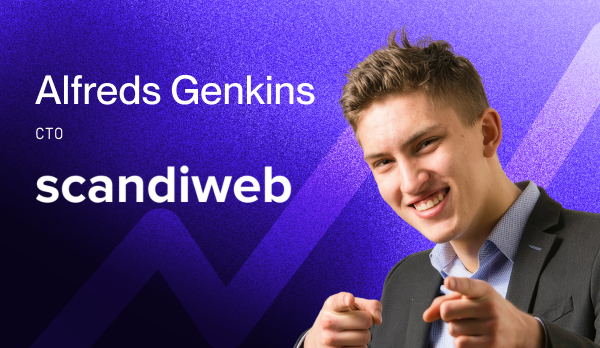
[00:00:35] Kailin Noivo: Hey folks. Really excited for our podcast today with Alfreds Genkins. Scandiweb is an agency we’ve all heard of before. They’ve been around for 10-plus years. Really excited to hear his opinion on the future of agencies.
[00:00:46] Kailin Noivo: Welcome to another episode of The Ecommerce Toolbox: AI in Retail. Joining us today, we have Alfreds Genkins, all the way over from Latvia. Really excited to have you on the show.
[00:00:57] Alfreds Genkins: Thank you. Thank you for inviting. I’m so excited to share my story today.
[00:01:02] Kailin Noivo: We always like to start off by learning a bit more about the guests. So, you’re the CTO of Scandiweb, which is, for those listening, Scandiweb’s a really, really big agency. They traditionally did a lot of Adobe Commerce, Magento work, but now they’re doing a lot more than just that. So, Alfreds, please walk us through your career journey and how you ended up in your role.
[00:01:20] Alfreds Genkins: Sure. I started coding at the age of 11, and I remember sitting in a room full of adults learning how to build JavaScript sliders. By 16, I was already doing a summer internship at Scandiweb and somehow, like, 10 years later, I’m the CTO. And I think one of the reasons why Scandiweb and I have grown so much together is because we both hate standing still. So, when I joined, we had fewer than 100 people, and today we are like 500 or more working on much bigger and more complex projects. But we still have that startup mentality. You know, we love challenging how things are done and trying something new. And that’s exactly why I’m both incredibly excited and a little worried about AI, because I know it’s going to fundamentally change how we work. And I can’t imagine a more exciting time to be doing what I do.
[00:02:20] Kailin Noivo: That’s really cool. I mean, congratulations. And it sounds like both you and I have been in kind of the ecomm game for the last decade-plus, so we’ve seen everything from on-premises to cloud to the headless wave. From your lens as a CTO and on the technology front, what have you really seen in the last 3 years and specifically the last 6 months, when it comes to how AI is now interfacing with this ecosystem?
[00:02:44] Alfreds Genkins: I think the biggest change is that AI is moving from being a coding assistant for developers to becoming something that can actually solve business problems. And I have a funny story about this, actually. Like, recently, we ran an internal experiment where I competed with one of our project managers to build the same app using AI. And I’ve always considered myself, like, amazing at building technical proof of concepts quickly. So, I was super confident I’d win this. And you know what? My project manager beat me. He delivered the application faster with more features, and the quality of the code was perfectly acceptable. And honestly, that surprised me a lot. When we looked at what happened, we realized that my technical expertise was actually slowing me down. I spent too much time telling AI which architecture to use, which technologies to choose, and how to structure the code. But the project manager approached it completely differently. His everyday job is to take business requirements from clients and translate them into tasks that developers and QAs can execute, and it turns out, oh, what a surprise, AI became pretty good at being that developer and QA. So, he simply explained what needed to be achieved and let AI figure out much of the implementation. And his approach worked better. That experiment made me realize something, like, really important. As AI gets better at writing code, we can spend less time on routine implementation and more time understanding what our clients actually need. At Scandiweb, we’ve already built a strong process for discovering business requirements and translating them into development tasks. But now AI allows us to shift more of our engineering talent towards discovery, research, and development of entirely new solutions. And that’s what really excites me. We suddenly have more brilliant minds of my colleagues available to work on bigger, more ambitious problems. And I think that’s where the real opportunity for agencies like ours lies.
[00:05:21] Kailin Noivo: By the way, that’s, first off, congratulations on having the kind of humility to speak like that, because I think it’s something we’ve all experienced in our businesses, even in ours, is if you kind of approach problems with pre-AI, things that were 100% true pre-AI, if you try and cram them into AI. When we actually built our first AI agent, that’s basically what started to happen. And we were trying to cram the AI into a box and say, hey, you’re this, you’re that, and feed it. And we ended up with, like, a worse outcome than just, like, exposing our raw data to the AI system. So, it’s really interesting to hear you say that, and I think it’s definitely something that can probably resonate with a lot of our listeners. Look, especially on the agency front, like we’ve seen a lot of merchants just in our customer base moving from Magento to managed platforms like Shopify to reduce complexity. Obviously, a lot of this was done in the pre-AI era, and it’s still being done now. But I’m curious, like now that AI is making development and customization cheaper and just easier, like you kind of gave as an example with your project manager, do you think that changes the competitive landscape between the different platforms?
[00:06:35] Alfreds Genkins: Oh, I think it absolutely does. Well, historically, Shopify offered like simplicity, while Magento offered you, well, flexibility. But that flexibility came at a price: complex development and expensive maintenance and blah, blah, blah, blah, blah. And AI is dramatically reducing that cost of change. I have this idea that in the AI era, everything kind of becomes everything. What I mean by that is that capabilities that once took years to develop are becoming much cheaper to reproduce. And you might have seen, like, open-source Photoshop or open-source AutoCAD. And the same idea applies here. Magento is open source, so we can ingest things. We have access to the entire codebase. We can bring the best ideas from other platforms into it. And remember those brilliant minds I mentioned earlier, who are now spending less time on routine development? Well, that’s exactly the kind of work. We can redirect that talent toward. But instead of spending all of their time implementing individual merchant requests, they can now focus on research and development, building entirely new solutions that benefit hundreds of merchants. And that’s exactly what we’ve done with Expedio. We took inspiration from Shopify’s rendering approach, and we built Magento’s rendering layer. Well, what’s the result? It’s marginally faster responses, like 6 times faster responses. Now Magento is faster than Shopify, like unheard of. A few years ago, that would have required like an enormous engineering investment. And today AI makes that much more affordable. I think we are just getting started. As the cost of change keeps falling, the historical limitations of ecommerce platforms become less permanent. And at Scandiweb, we’re determined to push those boundaries and help reshape what’s possible across ecommerce platforms.
[00:08:39] Kailin Noivo: Quick break from the conversation. Almost every operator we talk to is being asked the same 3 things: grow revenue, spend less on outside help, and actually get value out of AI, all with the team they already have. That’s why we built Noibu’s AI agents, CRO, A/B testing, performance accessibility, ROAS, and bug resolution. They start by auditing your store and ranking the biggest opportunities. Then they build the change, wait for your approval, ship it, and measure what it did. At Totally Bamboo, one person runs all of D2C across more than 600 SKUs; a collection page filter tested off their own shopper data converted 24% better. As a Toolbox listener, you get an exclusive free trial of our AI agents, and it runs until you have at least two changes live and measured. Go to noibu.com/podcast-audit. Now back to the conversation.
[00:09:29] Kailin Noivo: By the way, hearing you say this is so interesting because I feel like a lot of people are thinking this but maybe not saying it out loud. And like, I can’t help but think, like, how does this impact agencies? Traditionally, they sold hours for maintenance, for changes, and now, effectively, you’re saying that, with the introduction of AI, it effectively drives down the time, the cost, and the complexity, which is how effectively a lot of agencies were making money. Like, how are you thinking about this at Scandiweb? And how does this change the paradigm around retainers and things like that?
[00:10:00] Alfreds Genkins: Well, amazing question. I think you’ve touched on the most sensitive topic here, the elephant in the room, because AI creates very uncomfortable conflicts of interest between agencies and merchants. Imagine you are a merchant and your agency has been spending, let’s say, 100 hours every month maintaining your store. And now, with AI, an agency can deliver exactly the same work in just 20 hours. So, the question is, should your monthly bill go down by like 80%, like 5 times from your perspective as a merchant? Of course, like, absolutely right. But from the agency perspective, that’s like a painful decision. You’re essentially asking us, hey, would you consider cutting your revenue? And remember those brilliant minds we talked about earlier? Well, they need to get paid. They need to feed the babies. If we want to keep investing in innovation and moving the industry forward, we need a sustainable business model. And at Scandiweb, we really see just three ways going forward. So, number one, we need to open our doors to smaller opportunities. Historically, we’ve had to turn down smaller merchants and smaller projects, not because we didn’t want to help, but because an economy just did not add up. You can’t realistically assign a project manager and a developer to a task that only requires, like, a few hours of work. But AI changes that, and we need to accept that the average project size and check may become smaller while the number of merchants we can serve grows dramatically. And that’s one of the reasons we are building Ari, right? It makes it possible to bring our expertise to merchants who previously could not afford to go with Scandiweb. Second thing, well, we need to deliver more value to existing clients. If AI makes us 5 times more productive, why shouldn’t we deliver 5 times more value? There is a very interesting challenge here. What happens when we complete a merchant’s entire annual development backlog in just 2 months? What do we do next? Like, we can’t just sit around and wait for new tickets. We need to become much more proactive, understand our clients’ business, identify opportunities, and bring solutions to them before they even request it. That’s exactly why we are investing so heavily in research and development today and building products like Expedio, right. And the third thing, we need to rethink how we charge for our work. What if we stop selling development hours at all and start charging for the value we deliver? With AI doing much of the implementation, merchants should benefit directly from that productivity. That’s another idea we are exploring with Ari. Allowing merchants to work directly with AI while choosing how much human expertise and support they actually need. I think these three directions are going to be critical for agencies like ours. Because AI isn’t just changing how efficiently we work. It’s forcing us to rethink how we create value, who can we serve and, well, how we make money.
[00:13:37] Kailin Noivo: Alfreds, are you seeing clients demand more for their in-house hours? Are they looking to reduce the maintenance costs? Are they trying to bring things in-house? Coding’s been so democratized and people could do a lot more simple things with AI that they couldn’t a year ago. How are you seeing that play out in the field?
[00:13:53] Alfreds Genkins: Well, I think that’s the other side of the same transformation. AI doesn’t just change the budgets, right? It changes why merchants choose an agency at all. Historically, switching agencies was like a huge undertaking. Your existing agency knew your codebase, your customizations, your integrations and all those little technical details that might have been sprinkled around. A new agency could spend weeks or a month getting familiar with everything, and that friction is just awful. But it’s dramatically reducing that technical dependency. Today, AI agents can analyze an unfamiliar codebase and start working on tasks, like, instantly. And I think that creates a very interesting question for merchants, like, why am I still working with my current agency? Is it simply because switching has always been too complicated? Or is it because I genuinely love working with them? Do they understand my business? Are they proactive? Do they bring me ideas before I even ask? Do they make me feel like I’m staying in a 5-star hotel where someone is always thinking about what I might need next? And here’s something important: sometimes merchants want to benefit from AI, but their existing agencies aren’t moving fast enough to adopt it. And I don’t think merchants should have to wait for the agencies to catch up. That’s one of the reasons we built Ari. You can bring Ari to your existing development partner and let them work with it. You get the productivity benefits of AI while keeping the people you already know and trust. You don’t have to change your agency to change how your agency works. But if you are staying with your agency only because switching used to be difficult, perhaps now it’s a good time to reconsider. And I think there is a beautiful paradox here. The easier it is to switch agencies, the more important human relationships become. There is a phrase I really like: the survival of the friendliest. And I think it perfectly describes the future of agencies. The winners won’t necessarily be the agencies with the most developers or the most billable hours. They’ll be the ones that understand their customers, proactively create value and provide exceptional service. Because when switching becomes easy, the best reason for customers to stay is that, well, they actually want to.
[00:16:35] Kailin Noivo: I love that. And you already mentioned a couple of times that you guys are starting to develop your own AI agents for your clients. What types of agents, what do they actually do, and what’s the end value to the customer?
[00:16:48] Alfreds Genkins: Ari, our agent, brings together pretty much everything we’ve been talking about. Today we discussed how AI is changing development, reducing the cost of change and transforming relationships between merchants and agencies. Ari is our attempt to put all of that into practice. Imagine you’re running a Magento store and you want to make a change. Maybe improve your checkout, fix a promotion, I don’t know, or optimize your store’s performance. Traditionally, you would contact your agency, explain requirements, wait for an estimate, approve the work, and coordinate the release. With Ari, you simply describe what you want to achieve in natural language, well, as you do with AI. And it connects to your codebase, investigates how your code works, and asks you questions, but non-technical ones. No. It aligns on expectations, and then it plans the implementation, writes the code, tests and prepares everything for the release. And here’s where it becomes interesting. Ari doesn’t just write code and hope it works. We’ve built a specialized agentic harness around it based on years of Magento experience. So, we’ve tested it against real engineering tasks, studied where agents make mistakes and used these lessons to improve how it works. Ari operates in an isolated environment, so your live store is never affected. It can run tests, check its implementation and show you the result before anything goes into production. And I think it’s really important. The merchant shouldn’t have to understand the code. They should be able to evaluate the outcome, right? Did the checkout improve? Does the promotion work? Is the result actually what I requested? When something requires a business judgment, Ari should ask the merchant rather than make assumptions. For production releases, humans can remain involved. You bring your existing agency, use your internal team or work with Scandiweb. You decide how much human involvement you need. And this connects directly to what we discussed earlier about, like, smaller merchants. Tasks that previously required a traditional agency engagement can now become much more accessible. But I think the biggest opportunity goes beyond making development cheaper. AI isn’t just about doing the same work 5 times faster. It’s about making it possible to solve problems that were previously too expensive to even attempt. So, my advice to merchants is simple. Dream bigger, guys. Bring your most ambitious ideas to your technology partners. Challenge the limitations you’ve accepted for years. Because what seems impossible just a few years ago might be already achievable today. And ultimately, I don’t think the future of ecommerce is about writing more code. It’s about making better ideas possible.
[00:19:58] Kailin Noivo: Amazing. Alfreds. This was really, really, really good. Thank you so much for your time. This was a phenomenal episode. Really appreciate all your wisdom on these topics, and you looked at the elephant in the room straight in the eyes and answered some tough questions. So, I really appreciate that.
[00:20:13] Alfreds Genkins: Thank you. Thank you for inviting. Someone finally asked, you know, like, we’ve been discussing internally, and now, well, we just decided it’s time to share. So, thank you for asking. Thank you for inviting. Amazing.
[00:20:28] Kailin Noivo: Amazing. Thank you.
[00:20:29] Kailin Noivo: Before you go, if today’s conversation has you thinking about what you’d change on your own store, let our agents take the first pass. Until now, a store only got better as fast as the people working on it. That limit’s gone. Our agents find what’s slow, broken, confusing or leaking revenue, build the change and hand it back for your approval. Toolbox listeners get an exclusive free trial that runs until you have two changes, live and measured. Head to noibu.com/podcast-audit. That’s n-o-i-b-u.com/podcast-audit. Thanks for listening. See you next Wednesday.
[00:21:01] Outro: The Ecommerce Toolbox: AI in Retail is brought to you by Noibu. To find out more about Noibu and how we unify error monitoring, site performance and experience analytics to uncover growth opportunities and skyrocket your revenue, visit www.noibu.com. That’s n-o-i-b-u.com, and then make sure to search for The Ecommerce Toolbox: AI and Retail on Apple Podcasts, Spotify or anywhere else podcasts are found and click subscribe so you don’t miss out on any future episodes. On behalf of the team here at Noibu, thanks for listening.