
Expert Perspectives
Expert Perspectives
Episode 149


In this episode we talked about:
- How FortNine and Defender are using AI shopper assistants across complex product catalogs
- Why industry-specific context is essential for building useful ecommerce agents
- How AI can improve product comparison, review analysis, merchandising, and customer service
- Why FortNine is prioritizing “no regret” AI investments over chasing LLM traffic
- How AI agents can free customer service teams to spend more time with high-intent shoppers
- Why self-improving ecommerce experiences still need a human in the loop
- How faster AI feedback loops can create cognitive overload if teams do not filter the noise
🎧 Listen now on Apple Podcasts, Spotify, or YouTube

Episode highlights:
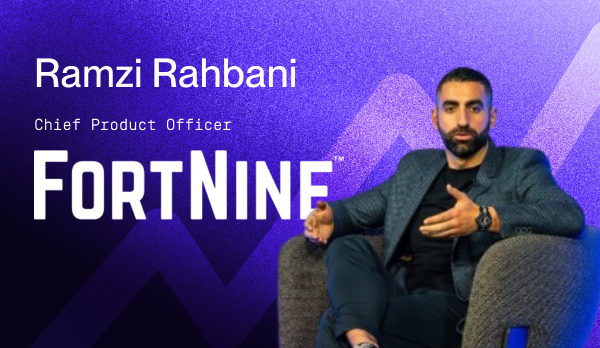
Ramzi's bottom line: AI doesn't need its own strategy; it needs to serve yours. At FortNine, that means starting from the problem, not the technology, whether the job is helping shoppers find the right part in a 1.5-million-SKU catalog or clearing routine service requests so people can spend time with high-intent customers. It also means keeping a human in the loop so faster feedback doesn't turn into noise. His rule for all of it: go slow to go fast.
Ramzi Rahbani & Kailin Noivo — Transcript
The Ecommerce Toolbox: AI in Retail • Human-Reviewed Transcript
[00:00:00] Ramzi Rahbani: We're so purposeful when we bring in AI. Like, we start from the problem statement. We don't go in with "Where should AI be used?" Someone once told me that when you're at the onset of doing something very early, it might feel like you're doing it wrong, or it might feel like it's wrong when you're one of the early movers. And we persisted because we felt like we were still learning. We were getting the voice of the customer.
[00:00:23] Kailin Noivo: Welcome to another episode of The Ecommerce Toolbox: AI and Retail. Joining us today, we have Ramzi. He's the CPO over at FortNine in Montreal. Really excited to have you on the show.
[00:00:34] Ramzi Rahbani: Thanks, Kailin. Really happy to be here.
[00:00:36] Kailin Noivo: Obviously, you have a ton of experience speaking. You've done a bunch of talks this year. I see you on LinkedIn all the time. Start off by giving us an intro: who the man is, a bit of your career journey, and how you ended up as an executive at FortNine.
[00:00:49] Ramzi Rahbani: Absolutely. I think, behind the career man, I'd start first with how I usually introduce myself. I'm a citizen of the world. I've lived all around the world, and I'm a forever student, always learning, always trying to stretch myself from a career standpoint. As a quick intro, I'm usually the person that's brought in to bridge the gap between technology and customer value. I've done it in banking, I've done it in retail, I've done it in travel, and now, in my current role, I'm the Chief Product Officer of the FortNine Group, where we're on a mission to become North America's number one destination for outdoor enthusiasts, from powersports to boating and RVs, and my vision is to create that one-stop shop for all their needs.
[00:01:35] Kailin Noivo: How are people building and launching AI agents in their business? Put simply. I know that you guys are using a lot of different AI agents, and we work together on some projects, so why don't we start off with the first AI project you did and walk us through the different stages? Because from 2022 to now, people started off with, like, I don't know, getting AI to write product descriptions. Right? And now people are running end-to-end workflows with AI. So, maybe start us from the beginning. When did you first hear of AI in its current form? I know it's been around for a long time, but in its current form. And then talk us through how you've been able to integrate it into different parts of the business to drive value, either for operations or for your customers.
[00:02:22] Ramzi Rahbani: Yeah, definitely. Look, the first thing I'd correct in anybody who's trying to do that is: don't approach it with the mindset of "let me deploy AI agents everywhere." Because to me, it's like you have a hammer, and everything becomes a nail. And so, you have to be very careful with that approach. This is why I always say, "If someone came to me and said, 'What's your AI strategy?' I'd say, hold off." That didn't change our approach. We still have a business strategy, and AI is an enabler. How does it fit in that strategy? So, I would say to anybody, stay anchored on your business needs, on your business vision, and then figure out where you have limitations and, naturally, where AI fits. But to answer your question very specifically, yes, I've seen an evolution, with AI tools being leveraged initially as an assistant and then starting to be surfaced in customer journeys and not necessarily staying behind the scenes. For us in the company, AI started as an assistant. You have developers that were slowly dabbling with AI; you have product managers slowly writing their requirements, their business needs, through AI; and you have marketers using it for content generation. And then we said, "Okay, great." That's kind of the slow phase of getting your feet wet. Then for us, the question became: is the future of retail done? Like, is the website gone? About 8 months ago, we were wondering that. And the reality is, no, it's not gone. AI is another channel to interact with. But we went in and brought in an AI shopping assistant, and that was our first foray into shopping differently. And now we're experimenting with an AI mode on the website where it takes over completely. And we're slowly getting into use cases where it's just not possible without AI. You know, trying to do fitment in the boating industry is nearly impossible in the traditional way, and so we're getting into use cases where AI just makes sense. And back to our strategy. So, what I would encourage everybody to do is get your feet wet, because it allows you to understand the capabilities, and then slowly start reevaluating some of the use cases where you said no in the past, and reframe it: is it possible now with the tools that we have, and could we reimagine this future together? Lastly, we have AI behind the scenes. To me, that's been monumental. We went through a massive Magento upgrade recently. For example, with Noibu's AI agent scanning our website, I was on a plane for 7 hours, and I had it scanning the website every 5 minutes, identifying pain points for me, and quickly working on the fixes. And I had all the developers ready to go. So, that's an example of a migration that would not have been possible, at least not at the scale and in the time frame that we did it, with so little disruption.
[00:05:10] Kailin Noivo: Okay, this is cool. There's a lot to dive into. So, to zoom out, you guys started using it. By the way, I love what you said about the hammer. If your strategy is running around with a hammer, everything becomes a nail, and it actually is problematic. If you approach it from first principles, like, "Hey, there is a technology platform shift. Where can I apply it to drive value that aligns with our strategy and vision?" That I love. So, if I understand correctly, you guys did a lot of thinking, and then on the back of that, you're like, okay, it probably makes sense to have a shopper agent, right? And this is kind of what our businesses started working on together. I'll send you the press release after. But we just completely repositioned our entire business two weeks ago around this because of the success we were seeing, where effectively you have all these data sources that people have had through different tools. You have heat maps here, session replay there, some compliance data here, you have some of your A/B testing data. You have all these different tools to effectively accomplish the same thing. At the end of the day, you're trying to make sure the site is fast, up, compliant, and optimized for user journeys. Everyone's basically trying to do that. So, we're all in on partnering with innovative leaders like you to help build and launch these agents. So, let's start diving into some of the specific agents that you've been able to build in the last couple of months. I know the first time I did a demo of one of our agents, someone on your team was like, "Wow! This is like my 5-year vision." So, being able to compress these things down, talk to us tactically: what are some of the agents that are live, helping you guys run your business today? Whether it's through Noibu or not, I'm curious about some of the actual tactical agents.
[00:07:02] Ramzi Rahbani: 100%. And I think you put it nicely. The job to be done is digital experience optimization. And how you do it is, you have various levers. So in our case, when we think of digital experience optimization, the first one is just the front door. How can you help people find things faster? We have 1.5 million SKUs in the marine industry. It's highly technical and complex. So, how do you navigate from this vast catalog that you have to what the customer is looking for? That's one of our first agents. We have Skipper on the Defender website, and we have Niner, which is our shopper assistant on FortNine. And over time, we've increased the capabilities of these shopper assistants. It started with being able to digest the catalog data, take queries from customers, and find them the right items. We then embedded compare features, because if you think of comparing products in the past, it was very static. I want to compare product A and product B. Great, you have a static table with key criteria. Well, every person is different; what you care about and what I care about are different. What if AI now allows you to compare items in real time, and you can change the dimensions you want to compare them on? So, we embedded our compare functionality there. We have a reviews agent that summarizes reviews but also allows you to query those reviews specifically to understand what other customers are saying. We have a virtual try-on agent that we're working on now. I'm buying apparel, and I want to try this item on. Great, try it on with an agent. It's much better. We have customer service agents that allow you to do many, many things quicker. And it's not about replacing any human; it's about getting you faster answers when you're shopping. We have agents like Noibu's agent that scan our website, keep us monitored, analyze our experiments, and suggest new experiments, so that we can optimize the experience for our customers. And now we even have agents that are shopping, simulating a shopper to tell us what we're missing in terms of merchandising and then suggesting what we need to augment. So, it's all the same jobs that we've had. It's the same jobs to be done. It's just connecting all that data, giving you faster time to feedback, and ultimately making us more effective and efficient. That's really, for me, what we're doing.
[00:09:21] Midroll: If you're listening to The Ecommerce Toolbox, you're entitled to a podcast-exclusive website audit. Go to noibu.com/podcast-audit for a free scan that uncovers the hidden friction blocking your conversions and shows you where you're leaking revenue.
[00:09:35] Kailin Noivo: Do you think the agents that are most relevant for folks are going to change based on their stack, their industry, and exactly what their stack looks like?
[00:09:46] Ramzi Rahbani: The industry, for sure. I do think there are core capabilities shared across many companies, especially ecommerce companies. But your differentiation is going to be that nuance, that 20% that is specific to your industry. As mentioned, the powersports industry has the concept of fitment; the boating industry does too. That is unique. You're not going to evaluate a part for a motorcycle the same way you're going to evaluate running shoes. So, that's a nuance that is industry-specific that you need to tie into. You also own a motorcycle for longer than you own a pair of shoes, ideally. And there are so many variables in the ownership experience that change that relationship between you and the customer. So, it's important to understand these nuances. The tech stack, that's a different story. I'd say the tech stack is your barrier, and you ideally want a tech stack that is flexible. I'm an ambassador with the MACH Alliance; we talk about composable ecommerce, and so you need a tech stack that is conducive to that. But one more element you didn't mention is that you need processes and governance, and you need to talk about them, because it's the big companies that need the most help there. You and I, when we tried Noibu and were trying to plug it in, we had so many things that we had to figure out and get access to, and to me that was a very important wake-up call: enable employees to do their best job. If there are so many barriers to adoption, that's not going to work. Processes and governance play a big role.
[00:11:20] Kailin Noivo: Yeah, it makes sense. By the way, to your point, most of the friction is actually standing up the thing, and then once everything's plugged in, you start seeing the outcomes pretty quickly. That's really interesting. From your vantage point, how are you guys seeing search volumes from LLMs change over time? Is that growing? Has it plateaued? Everyone thought they were going to lose a bunch of traffic. Traffic seems to be growing. Curious how that's been for you guys specifically.
[00:11:46] Ramzi Rahbani: Yeah, look, in the beginning, everyone was talking about exponential growth, but it's exponential if you're going from 100 to 3,000. We're still in the very low percentages. We've done quite a bit of GEO and AEO work, and I think fundamentally it depends on the industry. People are definitely querying at the onset. They're doing their research, but when it comes to that next stage of intent... I come from the travel industry. Travel has actually seen the lowest adoption. In fact, only 2% to 3% of people trust agents to make that final-mile decision. And in our industry, we're still seeing it be slow. People are asking, but that traffic is low. What I would say, though, is if we look back at what you and I said, it's less about people shopping through these agents and more about the no-regret moves that you're making in your company and your business that are going to allow you to be more effective and efficient and allow your customers to have a superior experience. That's where I'm putting my bets, and that's where I'm putting the energy with the team, rather than wondering what the future of shopping outside our website is. You have to be aware of these things. You have to ensure that your websites are open. You have to be aware of GEO. You have to be aware of best practices, but that's no different from what we're doing on SEO. There are some nuances, but it shouldn't take away from your business strategy.
[00:13:12] Kailin Noivo: Where have you tried to implement AI and it was like oil and water, it's not ready yet? Have you run into any use cases where you're like, I have a business problem, I'm trying to integrate AI, and it just consistently failed?
[00:13:26] Ramzi Rahbani: I wouldn't say we've failed yet, because we're so purposeful when we bring in AI. We start from the problem statement. We don't go in with "Where should AI be used?" But our shopper assistant had very low adoption at the beginning. It's still low, but it was very low, to the point where you're wondering, "Hey, am I doing something right?" And someone once told me that when you're at the onset of doing something very early, it might feel like you're doing it wrong, or it might feel like it's wrong when you're one of the early movers. And we persisted because we felt like we were still learning; we were getting the voice of the customer, we were getting more insights into the jobs to be done, and we pivoted and learned from it. But we kept anchoring on it. We just made it better. So, I wouldn't say we failed, but the early signals were not very strong, and we could have pulled the plug too early.
[00:14:18] Kailin Noivo: Very interesting. How is customer service as a use case? I know you and I were chatting a bit about that as well.
[00:14:22] Ramzi Rahbani: Yeah. So, I'm leading that effort on customer service. In my role, I also oversee customer service as Chief Product Officer and customer officer. On that front, there are some elements that are no-brainers. If you look at our business, 20% of the non-product inquiries are "Where's my order?" Domino's perfected that. You shouldn't be talking to an agent about "Where's my order?" You have things like a price match guarantee: "I want to do a price match." An AI agent is great at doing that. "I received an item with a damaged box." Great, AI agents can help you and do the first-level triage there. "I want to do a warranty claim." You need to upload images of the helmet, the front and the back. You should see how many times we receive missing images or the wrong images. AI agents are your first level of escalation. They reduce the number of back-and-forths that you have with the customer. They help our agents become more effective. And when I met with my team on the customer service side, I said to everybody, "Look, very clearly, I'm not here to replace anyone. I'm here to make you more valuable in your role." And that's really what's happening. We're clearing capacity so the team can spend more time helping the customer who's trying to buy an item and isn't sure. And I don't want to be telling them, "Hey, you have to finish your call in under 5 minutes." No, take your time. I've taken all the low-hanging fruit off your plate. Spend your time on that highly engaged customer who's asking questions about a product, and help them get proper service. So, that's kind of my motto on the service side.
[00:15:56] Kailin Noivo: That's actually super interesting. They're almost starting to go from service to sales, in a sense. The percentage of their time spent on the low-hanging, repeatable things is starting to decrease, so instead of rushing a customer off a call, to your point, they could spend more time, help the customer more, and capture more transactions.
[00:16:17] Ramzi Rahbani: We're at a very infancy stage. We just finished the agent, and we're deploying it now. So, I wouldn't say we've moved yet. However, that nuance of sales versus service is old to me. It's old thinking, because if you look back at the job to be done, our job to be done is to give the customer the best service that we can. And if service means that they're looking for product advice, we're in the service of the customer. So, I don't really look at it as sales versus service. I look at it as being able to listen to the customers that have higher intent and serve them better rather than rushing them.
[00:16:51] Kailin Noivo: Very cool. No, I love that framing. I wrote a piece on recursive self-improving websites, where effectively you have AI agents that are consistently working to make your site and your site experience better. How much time have you guys spent at the leadership level talking about that concept? Is it still too Terminator, in the sense that it seems too far away or too foreign a concept? Or are you guys fully thinking about one-to-one personalized sites for people, recursive self-improving websites where basically every hour of every day they're consistently getting better? How much of a talking point has that been?
[00:17:34] Ramzi Rahbani: Yeah, recursive is not new news for us. If you look at accessibility for our website, the score is 100 on Defender. We already have recursive self-improving sites for accessibility, and you and I discussed that. It's constantly scanning our website, identifying 90% of the issues, and actually self-resolving them. Now, with the other enhancements we're doing, with Noibu, for example, we still have a human in the loop. But where it's helped me a lot is, for example, I have an agent that scans our customer service channel at all times and allows me to triage and identify noise versus actual challenges. It helps me identify the fixes that are required and then nudges me one last time before I escalate to the developers. So, I like having that last check just to make sure it's clean. And over time we're learning from that. But we keep the human in the loop there, because what I found otherwise is you're really polluting your system: it's just pushing, pushing, pushing, and it becomes almost unsustainable for our devs, even from a PR review standpoint. And as a leader, too, it's a very tough time. We talk with a lot of peers, and the level at which I have to make decisions nowadays, because the feedback loop is so fast, that cognitive load is intense, and I don't wish it on anybody. Leaders in this generation are going through a lot. We already had COVID, which pushed us to deal with states of the business we had never seen before. But now you're dealing with time-to-feedback that is so quick it's almost paralyzing in some instances. I think the same is happening for engineers, and we have to be careful not to inundate them with noise to the point where they lose the picture of what truly matters. It's the same with the codebase, it's the same with recursive self-improving websites, and I think it's the same for leadership now. So, we have to go slow to go fast. And what I've done, at least in my case, is filter that. Everything is filtered. There's still a human in the loop, and it's only surfacing key decisions, criteria, or code that we need to change.
[00:19:52] Kailin Noivo: It's funny you say that. I think it was the CEO of Shopify who wrote the AI memo. Everyone's pushing people to use AI at the employee level, but it's creating these situations where someone forwards you a clearly AI-generated 47-page report, and it's like a grenade. An AI-generated grenade. Yeah, it's very interesting. It makes a lot of sense. Ramzi, as we look to wrap up, obviously, you guys are on the forefront of innovation. You guys are really cool. I love that you guys are Canadian as well. What's top of mind for you going into Q4 and next year? How has the latest innovation this year informed your thinking for the end of this year and early next year?
[00:20:38] Ramzi Rahbani: I'm very energized. I'd say I'm very energized and optimistic. We went from a lot of uncertainty with AI, not sure what it meant for the business. Where do we go? How does it change our business? And after all these conversations we had around framing where we want to go as a business and how AI can enable us, I feel extremely energized. Extremely. And I feel like the world is our oyster. My focus is creating a total ownership experience across our businesses. Because at the end of the day, we're dealing with motorcycle owners, RV owners, and boat owners. And I feel like AI is really going to allow us to connect all the dots and create a better ownership experience for them. I'm not forgetting where we're going, which is that ownership experience. And I'm not forgetting where we came from.
[00:21:21] Kailin Noivo: I love it. I love it. Cool. Well, as we wrap up, I appreciate you hopping on. This was a great episode. Really appreciate you taking the time.
[00:21:29] Ramzi Rahbani: No. Thank you, Kailin, as always.
[00:21:31] Outro: The Ecommerce Toolbox: AI and Retail is brought to you by Noibu. To find out more about Noibu and how we unify error monitoring, site performance, and experience analytics to uncover growth opportunities and skyrocket your revenue, visit www.noibu.com. That's n-o-i-b-u.com. And then make sure to search for The Ecommerce Toolbox: AI and Retail on Apple Podcasts, Spotify, or anywhere else podcasts are found, and click subscribe so you don't miss out on any future episodes. On behalf of the team here at Noibu, thanks for listening.
FAQ
Other episodes



.png)
.png)
.png)
.png)
.png)


.png)
.png)
.avif)
.avif)
.avif)
.avif)
.avif)
.avif)

.avif)
.avif)
.avif)
.avif)
.avif)
.avif)

.avif)

.avif)
.avif)
.png)
.avif)
.avif)
.avif)

.avif)
.avif)
.avif)
.avif)
.avif)
.avif)
.avif)
.avif)
.avif)
.avif)
.avif)
.avif)
.avif)
.avif)
.avif)
.avif)
.avif)
.avif)
.avif)
.avif)
.avif)
.avif)
.avif)
.avif)
.avif)
.avif)
.avif)
.avif)
.avif)
.avif)
.avif)
.avif)
.avif)
.avif)
.avif)
.avif)
.avif)

.avif)
.avif)
.avif)
.avif)
.avif)
.avif)
.avif)
.avif)
.avif)
.avif)
.avif)
.avif)
.avif)
.avif)
.avif)
.avif)
.avif)
.avif)
.avif)
Other episodes
Audit your site today
Understand the revenue impact of all errors on your site and how to swiftly reproduce and resolve.