The role of the ecommerce leader has transformed more rapidly over the last decade than perhaps any other function in retail. The days of siloed brand teams and isolated performance marketers are gone - replaced by a world in which storytelling, acquisition, technology, and data must operate as a single unified engine.
Host Kailin Noivo speaks with Steve Dumas, former VP/Director of Digital and Direct Marketing at Grandin Road, about what it really takes to evolve legacy retail brands, build agile digital teams, and navigate the growing expectations around AI, creative velocity, and rising acquisition costs.
His central message? Modern ecommerce success isn’t about choosing between brand and performance, it’s about mastering the art of doing both simultaneously.
Brand vs. performance isn't a tradeoff; it's a marriage
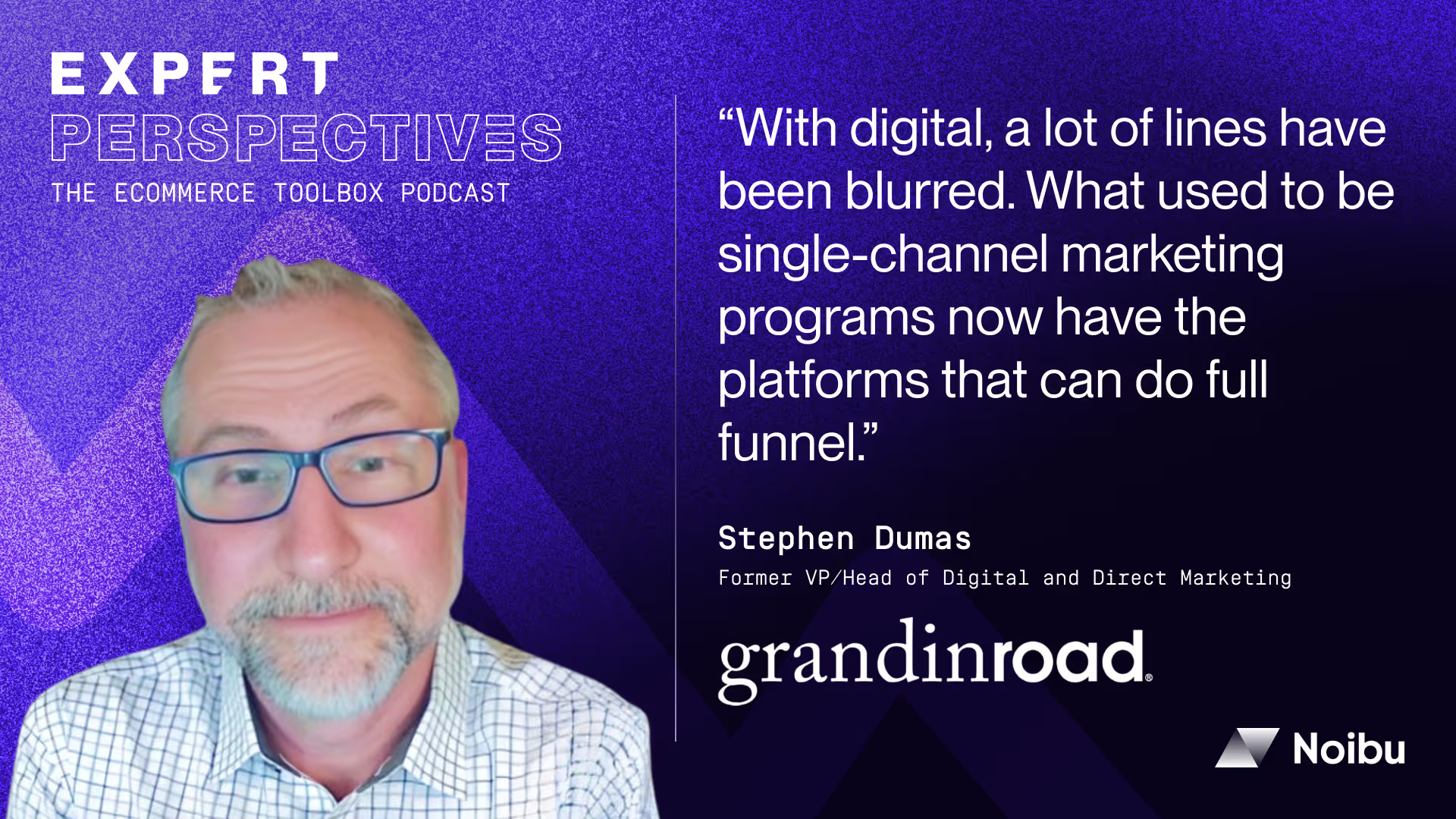
A decade ago, brand and acquisition were separate functions with different goals, budgets, teams, and KPIs. But according to Steve, those walls have collapsed, and today’s marketers must be able to operate full-funnel from awareness through conversion.
The takeaway: Creative storytelling is no longer just an option - it’s the fuel performance channels now require. Without emotionally resonant content, every dollar becomes more expensive.
One parent company, two brands, two completely different marketing strategies
While Ballard Designs and Grandin Road sit under the same corporate umbrella, Steve explains that their customers, brand identities, and product models required intentionally different marketing approaches.
Ballard = whole home, furniture-centric, long consideration cycles Grandin Road = seasonal décor, event-driven, fast buying cycles
To win, each brand required:
✔
Distinct brand storytelling tones
✔
Different creative and merchandising rhythms
✔
Customer journey mapping based on real behavior, not assumptions
Lesson: You don’t scale success by copy/paste. You scale it by deeply understanding the cultural, emotional, and purchasing context of your customer.
Tech stack reality: AI doesn’t reduce teams, it increases the need for human capability
With boardroom enthusiasm around AI climbing fast, Steve offers a contrarian but grounded view:
Early automation and algorithm-driven tools don’t simplify work; they actually increase operational complexity.
When Steve implemented AI-driven email personalization, instead of reducing workload, it:
Increased creative volume requirements
Created new demands on merchandising collaboration
Required teams to learn new technical and analytical skills
AI didn’t replace humans - it elevated the skill bar.
And the misconception that “all AI tools are interchangeable” is dangerous - Meta’s ad-optimization AI, Google’s search-intent AI, and lifecycle/email personalization AI each solve entirely different problems, require different inputs, and demand different team capabilities.
The real differentiator going forward?
Teams who are adaptable, curious, and fluent in both creative thinking and analytical decisioning.
Why storytelling, social content & influencers now shape the marketing mix
As acquisition costs accelerate post-COVID, Steve emphasizes the shift toward owned storytelling and influencer partnerships done authentically, not transactionally.
As Steve emphasizes, marketing today is more about storytelling. Influencers matter because customers want real people using real products and social content has become the core of how we communicate.
So, it’s important for modern marketers to merge analytical rigor with creative intuition. For example, platforms like Meta require deeply creative-led strategies, success depends on understanding how the creative drives business results and being able to communicate that effectively with creative teams.
The modern marketer must:
Create high-volume content that is emotionally magnetic
Understand platform differences deeply, not generically
Blend data-driven targeting with creative strategy
In this world, retention and loyalty become profit centers, and channels like social and influencer are not brand plays - they’re performance drivers.
The bigger picture
Steve’s journey, from email marketer to enterprise digital leader, proves one powerful truth: The future of ecommerce belongs to hybrid thinkers.
Brands that succeed won’t be the loudest or the highest-spending. They’ll be the ones that:
Blend brand and performance seamlessly
Build cross-functional teams fluent in both creativity and analytics
Adapt continuously as AI reshapes workflows
Tell stories that customers care about, not stories algorithms optimize
Digital transformation isn’t about more tools - it’s about better thinking, better collaboration, and better storytelling.
Want to hear more from Steve Dumas on blending creativity with data, and navigating the evolving digital landscape? Catch the full conversation on the Ecommerce Toolbox: Expert Perspectives on your favourite podcast platform.
Key takeaways from Stephen Dumas on modern ecommerce leadership
Challenge
Stephen’s Perspective
Strategic Outcome
Historic separation between brand teams and performance/acquisition teams
Brand, acquisition, and growth can’t live in silos anymore — modern platforms operate full-funnel, and marketers must think end-to-end from awareness to conversion.
Teams that blend brand storytelling with performance discipline see stronger, more efficient growth instead of channel-level wins that don’t move the business.
Two sister brands (Ballard Designs & Grandin Road) under one parent, but very different customers and buying cycles
You can’t copy/paste what works. Each brand needs its own tone, creative rhythm, and journey design based on how its customers actually shop.
Ballard focused on whole-home, longer consideration storytelling, while Grandin Road leaned into seasonal, event-driven triggers — both winning on their own terms.
Expectation that AI and automation will reduce headcount and simplify workflows
AI-driven tools often increase the need for human capability — more creative assets, more merchandising input, and deeper platform expertise.
Teams that invest in upskilling and adapt to new tools outperform those waiting for AI to “replace” work that actually just changed shape.
Rising acquisition costs (CAC) making performance marketing more expensive
Storytelling, social content, and authentic influencers are now core to performance — not just brand garnish. Content volume and quality drive efficiency.
Brands that treat social and influencer as performance channels build stronger retention, better ROAS, and richer first-party audience data.
Rapidly evolving digital landscape and martech stack
The winning marketers are hybrid thinkers — comfortable with both creative and analytical work, and willing to go deep on the tools they use.
Organizations that hire and develop hybrid talent build more agile teams, make better decisions, and adapt faster to platform and AI changes.
Who is Stephen (Steve) Dumas and what is his background in ecommerce?
Stephen (Steve) Dumas is a seasoned digital and ecommerce leader who has worked across email marketing, paid search, comparison shopping, and full-funnel digital strategy since the early 2000s. He’s held leadership roles at brands like Ballard Designs and Grandin Road (within the Cornerstone Brands family), as well as time at Silverpop and IBM working on retail segmentation and storytelling. His career spans 13–15+ years in ecommerce, digital marketing, and marketing technology.
How has the relationship between brand marketing and performance marketing changed?
Stephen explains that brand and performance used to be separate, siloed functions with different goals, teams, and budgets. Today, those walls have collapsed. Modern platforms like Google and Meta operate full-funnel, and effective marketers must connect brand storytelling, acquisition, and growth as one unified system. Instead of choosing between brand or performance, winning teams excel at doing both simultaneously.
Why did Ballard Designs and Grandin Road need different marketing strategies?
Although both brands sit under the same parent company, their customers, product mix, and buying cycles are very different. Ballard Designs focuses on “whole home” furniture and decor with longer consideration cycles. Grandin Road is more seasonal and event-driven, with fast purchasing cycles around holidays and occasions. As Stephen notes, you can’t copy/paste a playbook — each brand needs distinct storytelling, creative rhythms, and customer journey mapping based on real behavior, not assumptions.
How does Stephen Dumas view the impact of AI on ecommerce and marketing teams?
Stephen sees AI as an evolution of personalization and algorithms, not a magic replacement for people. Many tools now branded as “AI-driven” or “AI-powered” actually increase operational complexity. When he implemented an algorithmic email tool, it changed workflows, increased creative demand, and required deeper merchandising involvement. AI can improve targeting and efficiency, but it still depends on humans who understand strategy, data, and brand voice.
Why does Stephen say AI can increase, not decrease, the need for human marketers?
According to Stephen, AI “uses more, not less, human attention.” Advanced tools demand:
More creative assets to feed algorithms and personalization engines
More merchandising and marketing collaboration to shape offers and messaging
Deeper platform expertise for tools like Google Ads, Meta, and email AI
Teams still need people who know how to brief AI, interpret outputs, and refine content so it’s on-brand and effective.
What role do storytelling, social content, and influencers play in modern ecommerce?
As acquisition costs rise, Stephen highlights a clear shift toward storytelling and social-led content. Fifteen years ago, content meant long-form blogs and heavy landing pages. Today, the core content battleground is social media and influencer marketing. Customers want to see real people using real products, and influencers—when authentic and well-vetted—become powerful advocates. In this context, social and influencer programs are not just “brand plays”; they are critical performance drivers.
How have rising customer acquisition costs (CAC) changed the ecommerce marketing mix?
Rising CAC, especially post-COVID, has pushed brands to:
Invest more in owned storytelling and social content
Use influencers and creators as extensions of their brand
Focus on retention, loyalty, and customer value instead of pure top-of-funnel volume
Stephen notes that platforms like Meta are extremely creative-led, so success depends on understanding how creative drives business outcomes, not just targeting or bidding tactics.
What skills does Stephen believe modern ecommerce marketers and leaders need?
Stephen emphasizes the importance of hybrid skill sets. Today’s digital marketers must:
Blend right-brain creativity with left-brain analytics
Be comfortable experimenting with and going deep on marketing technology
Understand both creative strategy and performance metrics
He encourages teams to stay adaptable, continually learn new tools, and develop both storytelling and data skills to keep up with a rapidly changing landscape.
What is Stephen Dumas’s biggest lesson for ecommerce leaders navigating digital transformation?
Stephen’s core message is that digital transformation isn’t just about adding tools. It’s about better thinking, better collaboration, and better storytelling. The future belongs to brands that:
Unify brand and performance instead of treating them as tradeoffs
Tailor strategies to the real behavior and context of their customers
Use AI and martech to enhance human teams, not replace them
In his view, modern ecommerce success is built by hybrid thinkers who can connect creativity, data, and customer experience into one cohesive engine.



.avif)
.png)
.png)